As an Amazon Associate, we earn from qualifying purchases. Some links on this site are affiliate links at no extra cost to you. Our recommendations are based on thorough research and editorial judgment.

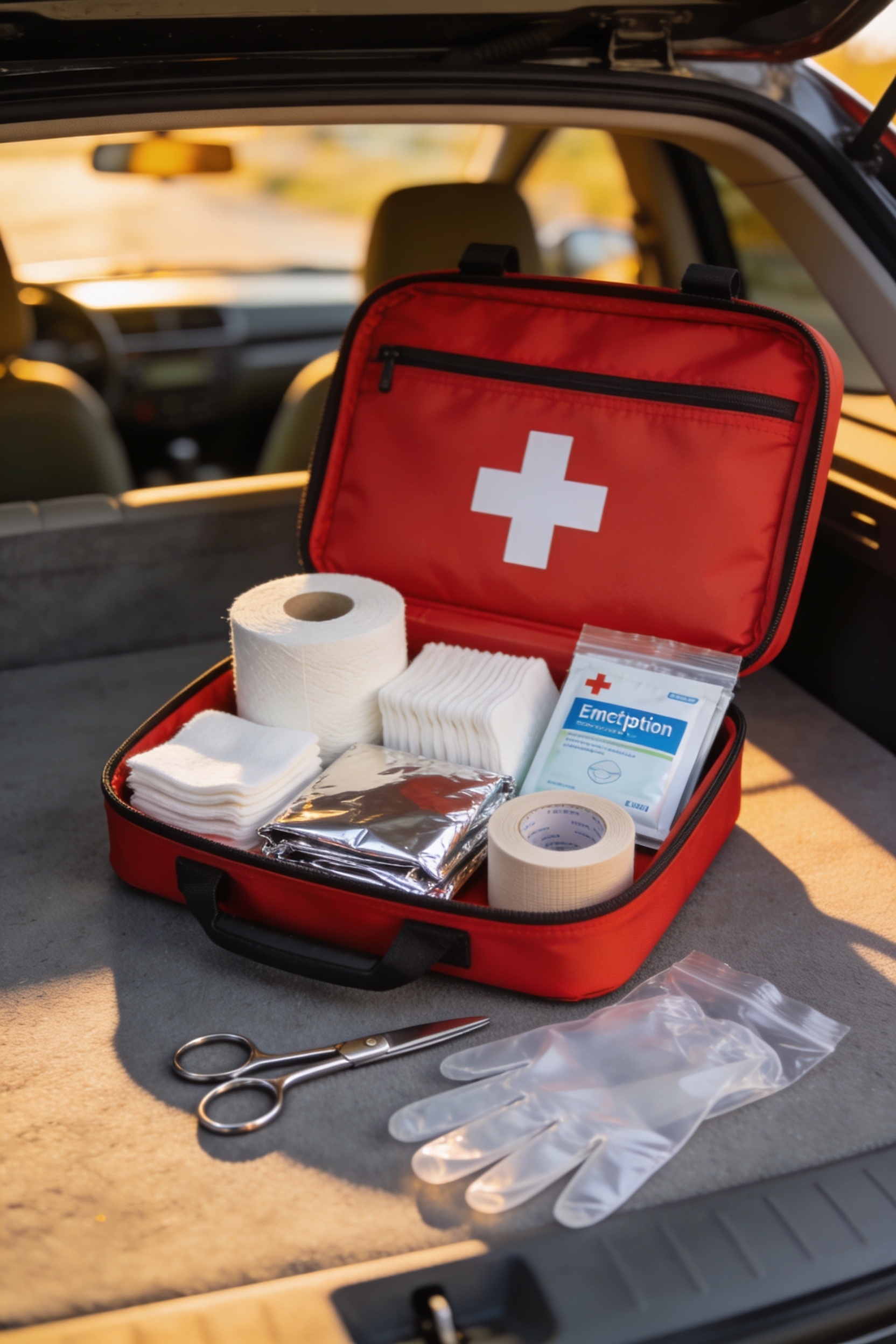
First Aid Kits for Cars: What Should Actually Be Inside?

Your car’s first aid kit should have wound supplies like bandages, gauze, and antiseptic wipes for minor injuries. Throw in bleeding-control items, disposable gloves, and a tourniquet for serious accidents. Add practical tools—tweezers, scissors, thermometer—plus pain relievers and an emergency blanket. Don’t forget seasonal stuff like burn cream for summer or hand warmers for winter. Keep a flashlight, phone charger, and first aid manual handy. The real trick? You’ve got to check expiration dates monthly and swap out worn items, because discovering expired pain relievers during an actual emergency is the worst timing imaginable—but stick around and I’ll show you exactly how to keep yours ready.
Key Takeaways
- Wound care essentials include adhesive bandages, sterile gauze pads, antiseptic wipes, and medical tape for infection prevention.
- Bleeding-control supplies like hemostatic dressings and tourniquets address severe injuries; training recommended for proper tourniquet use.
- Practical tools such as tweezers, scissors, thermometer, and flashlight enable effective emergency response and assessment.
- Medications include over-the-counter pain relievers, antiemetic tablets, and anti-diarrheal medication for common travel-related ailments.
- Monthly inspection of expiration dates, seasonal adjustments, and replacement of worn items maintain kit readiness year-round.
Why Your Car Needs a First Aid Kit
When you’re cruising down the highway or parked at a friend’s house, the last thing you’re probably thinking about is what happens if someone gets hurt. But here’s the thing—emergencies don’t wait around for you to be ready. I’m talking about scraped knees, minor cuts, or that one time your friend twisted their ankle getting out of the car. Having a first aid kit in your vehicle isn’t just smart emergency preparedness; it’s about passenger safety and being the person who actually knows what to do. You don’t need to be a doctor to help someone feel better fast. All right, so think of your car’s first aid kit like your car’s superhero sidekick—always there when things go sideways. Like other essential car care accessories, a well-stocked first aid kit should be stored in a cool, dry place within easy reach during emergencies.
Core Wound-Care Supplies Every Driver Should Carry
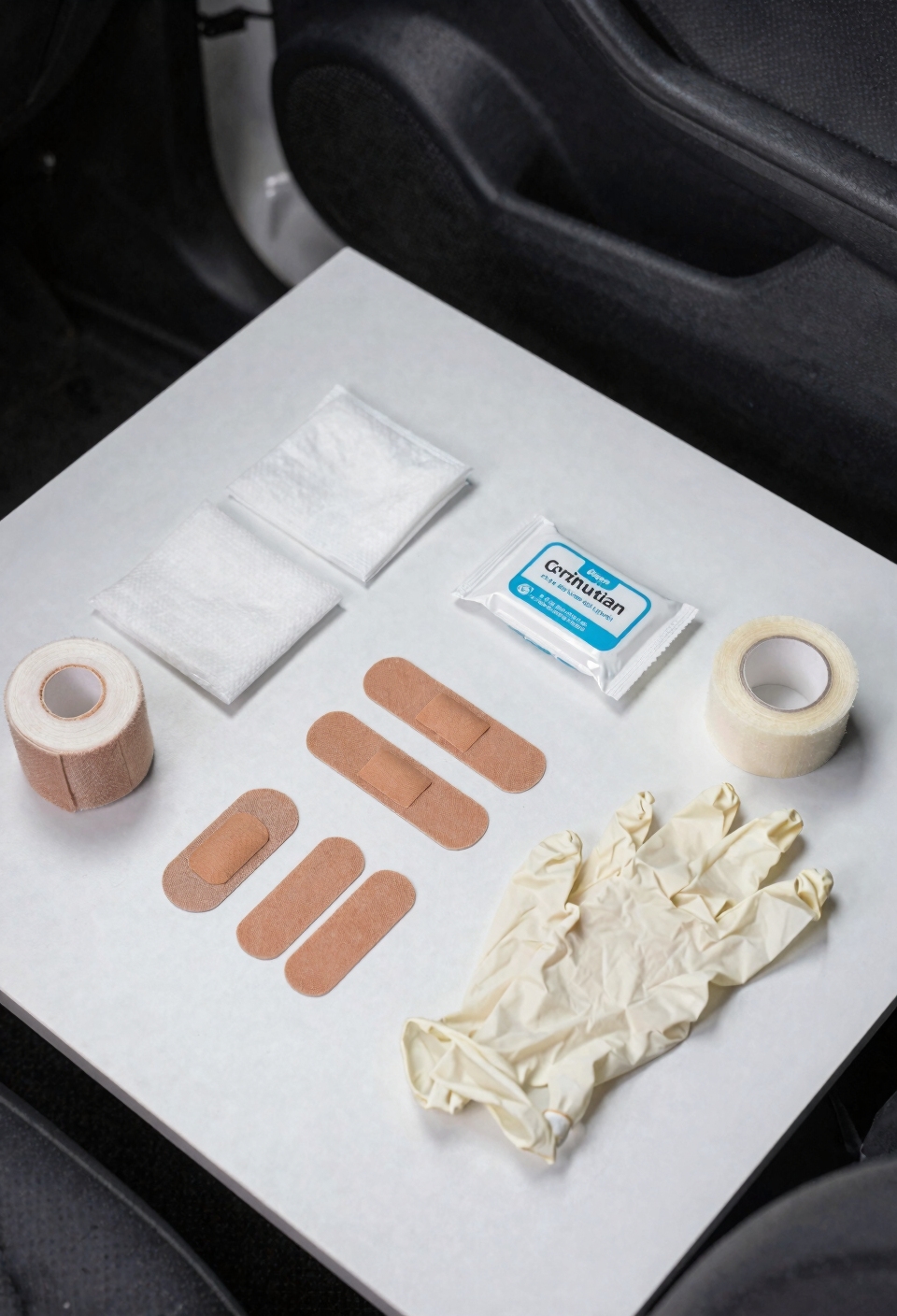
Now that you know why your car needs a first aid kit, let’s talk about what actually goes inside it—starting with the stuff you’ll reach for most often. Your core wound-care supplies are basically the foundation of any solid kit. You’ll want adhesive bandages in different sizes for minor cuts and scrapes—they’re lifesavers when you get a paper cut or small injury. Grab sterile gauze pads too, because some wounds need more coverage than a regular bandage provides. Add rolled gauze or conforming bandages for wrapping, plus medical tape to hold everything secure. For wound irrigation, keep some antiseptic wipes handy. They’ll clean your injury before you dress it, which honestly makes a huge difference in preventing infection. Like quality protective covers in automotive systems, proper wound protection creates a barrier against contamination and environmental hazards. These items handle most everyday car emergencies you’ll actually encounter.
Bleeding-Control Supplies for Serious Injuries
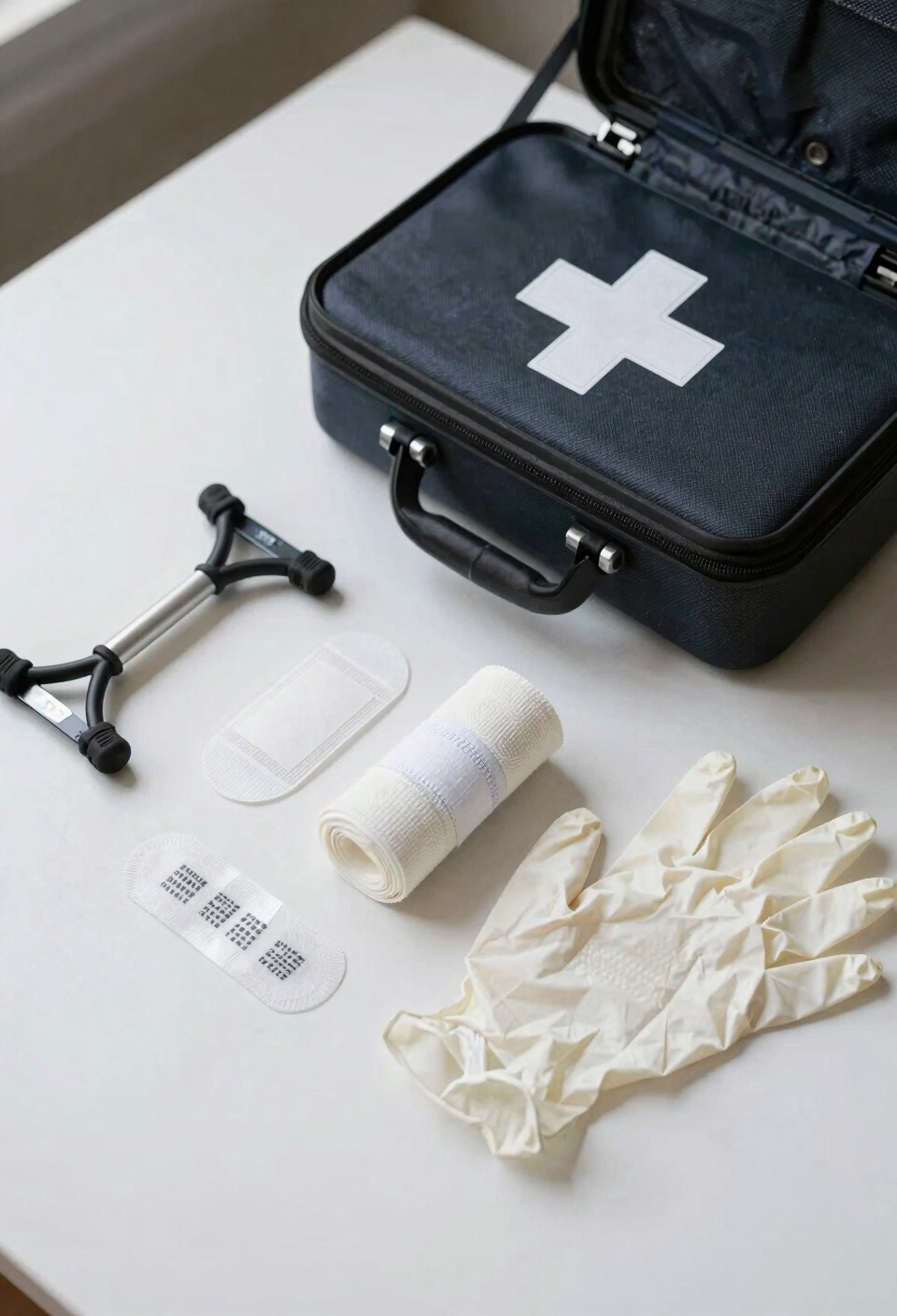
Stuff like cuts and scrapes are manageable, but serious bleeding is a whole different level—and honestly, it’s exactly why you need to think beyond basic bandages.
Here’s the thing: if you’re ever in a really bad accident, you’ll want hemostatic dressings in your kit. These are special gauze pads that actually help blood clot faster, which is genuinely lifesaving. You should also carry a tourniquet—that’s a tight band that stops bleeding on arms or legs. Now, tourniquet training matters though. You can’t just throw one on randomly; you need to know how it works so you don’t accidentally cause more damage.
Disposable gloves are essential too. They keep you safe while helping someone else. Consider storing these supplies alongside tactical vehicle organizers to keep everything accessible and protected during emergencies. Seriously, grab these supplies now.
Tools You’ll Actually Use: Tweezers, Scissors, and Thermometer
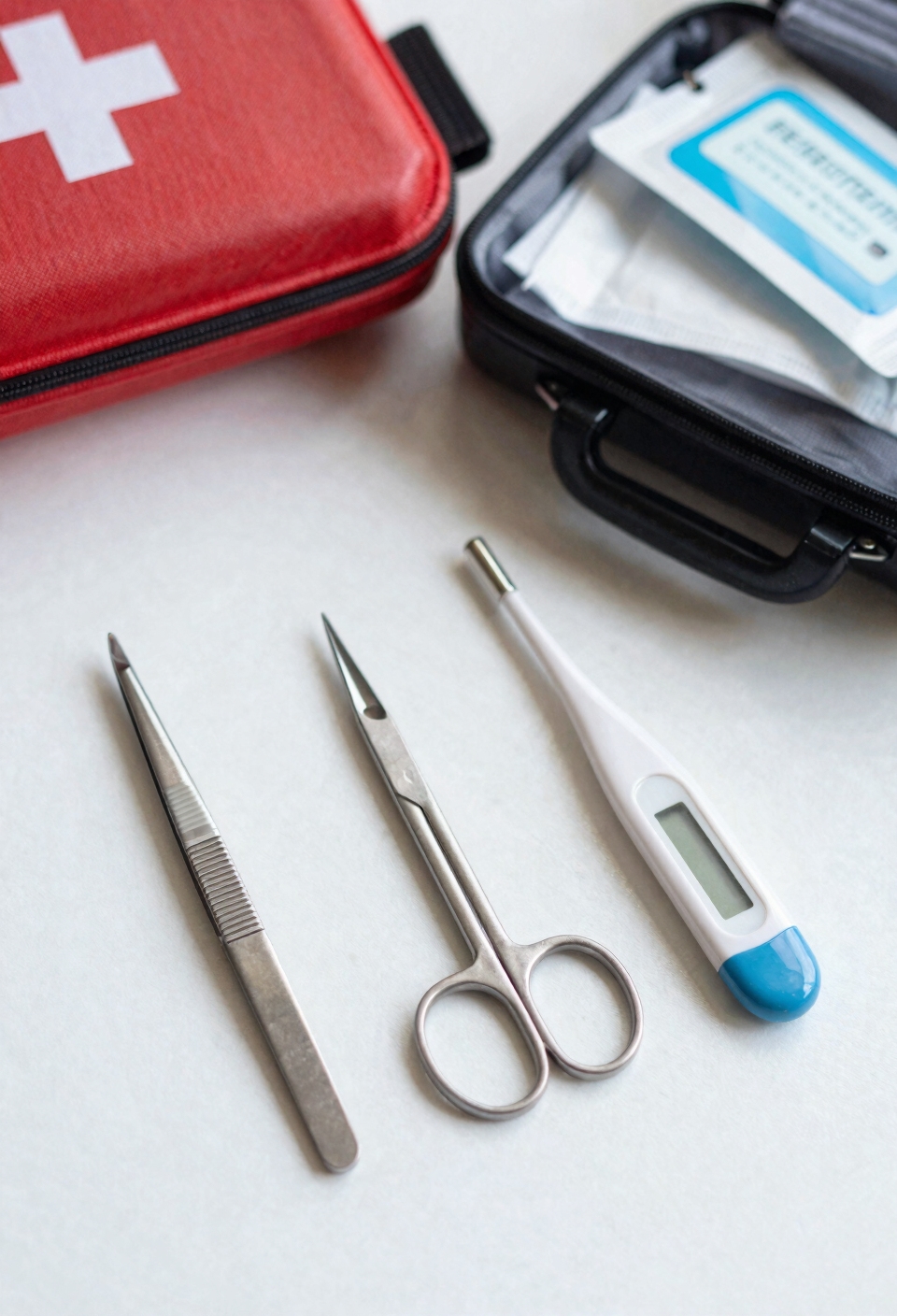
Beyond the bandages and gauze, you’ll want to grab a few tools that might seem small but actually make a huge difference when something goes wrong. I’m talking about precision tools that turn your kit from basic to actually useful.
First up: tweezers. You’d be surprised how often you need them—splinters, debris, even ticks. Tweezers let you remove stuff safely without making things worse.
Now, scissors or trauma shears are clutch for cutting tape, gauze, or even clothing in real emergencies. They’re way better than fumbling with your hands.
Finally, a thermometer checks if someone’s running a fever, which tells you how serious things really are.
These aren’t flashy additions, but they’re essential for genuine emergency preparedness. They’re the difference between handling a situation smoothly and panicking. Many first aid kits also include seatbelt cutters and window breakers for rapid egress during vehicle emergencies, which can be critical when seconds count.
Pain Relief and Travel Medications
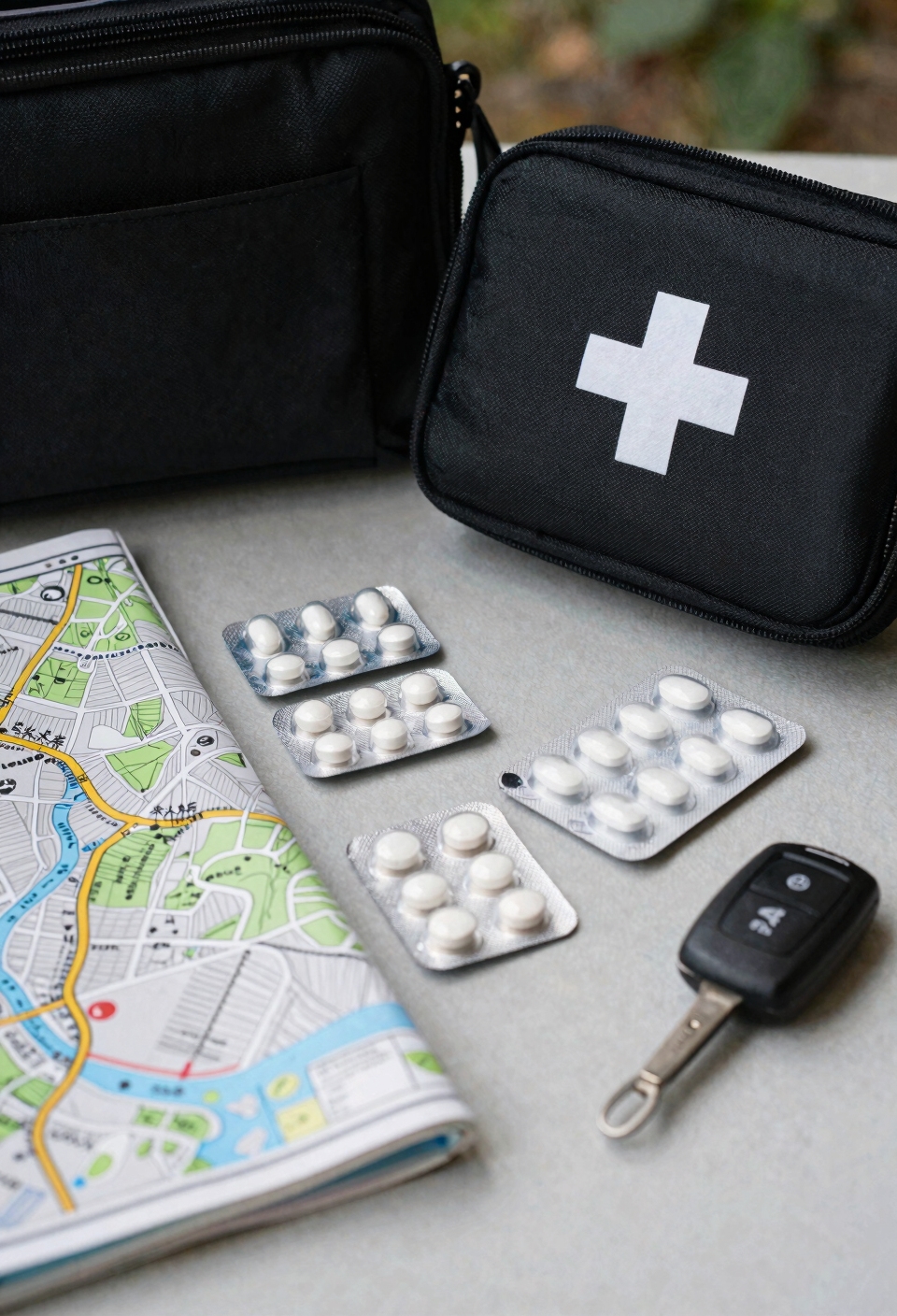
When you’re driving around, headaches, sore muscles, and upset stomachs don’t really care about your schedule—they just show up. That’s why I keep OTC analgesics like ibuprofen and acetaminophen in my car kit. Seriously, a sudden headache can wreck your focus behind the wheel, and you don’t want that.
I also throw in antiemetic tablets for motion sickness or nausea. You’d be surprised how often you’ll need these during long drives or when traffic gets rough. Motion sickness can hit suddenly, and trust me, having medicine ready beats suffering through it.
Now, stomach issues happen too. I include anti-diarrheal medication because road trips are unpredictable. These small additions make driving way more comfortable and keep you actually paying attention to the road instead of your discomfort. Just like how document organization systems help you access important information quickly during emergencies, a well-stocked first aid kit ensures you can address health issues without distraction.
Shock Prevention and Comfort Items
All right, so you’ve got your pain meds sorted and you’re feeling good about staying comfortable on the road—but here’s the thing: comfort isn’t just about treating what’s already bothering you. It’s about preventing shock, which happens when your body goes into overdrive during an emergency. Your emergency blanket or Mylar blanket becomes your best friend here. I mean, wrapping yourself in one keeps you warm and helps your body stay calm. Add some seat cushioning for support during long waits for help, and you’re golden. Triangle bandages work as slings or head support too. Take slow, calming breaths while you’re wrapped up. Sounds simple, but you’d be surprised how much these comfort items actually matter when things get stressful. For additional comfort during extended waits, consider non-slip seat cushions with ergonomic support, which can help maintain proper alignment and reduce physical stress during emergencies.
Car-Specific Additions Beyond Standard Supplies
Okay, so you’ve wrapped up your comfort items and you’re feeling pretty prepared—but here’s where your car first aid kit gets its real personality. I’m talking about the stuff that actually makes sense for being stranded on the side of the road. You’ll want a solid flashlight with extra batteries because, honestly, emergencies love happening when it’s dark. A first aid manual or quick-reference guide saves you from panicking and Googling symptoms while stressed. Reflective triangles or high-visibility markers? They’re lifesavers for roadside communications—making sure other drivers see you before things get worse. For maximum visibility at night, consider adding DOT-C2 reflective tape to your vehicle’s exterior to enhance conspicuity from multiple angles. Don’t forget vehicle specific storage solutions either. A compact organizer keeps everything from rolling around your trunk, and a cell phone charger guarantees you can actually call for help.
Maintain Your Kit: Expiration Dates and Seasonal Restocking
Because your first aid kit isn’t like a birthday present you open once and forget about, you’ve actually got to keep it fresh and ready to go. I mean, bandages expire, medications lose their strength, and stuff gets used up without you noticing.
Here’s the thing: create monthly checklists to spot what’s running low or past its expiration date. Trust me, discovering expired pain relievers during an actual emergency is the worst timing. Now, seasonal swaps matter too. Winter means stocking up on extra blankets and hand warmers, while summer needs more burn cream and sunscreen. Similarly, emergency features like seatbelt cutters and window breakers should be inspected every few months to ensure they’re functioning properly when you need them most.
Mark your calendar, do quick checks, and replace what’s worn out. Your future self will seriously thank you when you actually need that kit and everything’s legit ready.
Frequently Asked Questions
How Should I Organize and Store My First Aid Kit in My Car for Quick Access?
I organize my kit using compact compartments to separate supplies by category, then use magnetic mounting on my car’s dashboard or door panel for immediate visibility. This guarantees I’ll find what I need fast during emergencies.
What’s the Difference Between Nitrile and Latex Gloves, and Which Is Better?
I’d argue nitrile gloves are monumentally superior for your car kit. They’re puncture-resistant with exceptional nitrile durability, while latex allergies affect countless people. Nitrile’s my go-to choice for reliable protection.
Can I Use Expired Medications From My First Aid Kit in Emergencies?
I’d avoid using expired medications because I can’t guarantee their medication efficacy, and the risk assessment isn’t worth it. I replace mine regularly to make sure they’ll work properly when I actually need them in an emergency.
How Often Should I Check and Refresh My Car’s First Aid Kit Supplies?
I recommend you inspect quarterly to catch expired medications and damaged supplies. You’ll want to replace perishable items like antiseptic wipes and ointments regularly to guarantee your kit’s effectiveness during emergencies.
Are There Specific First Aid Items Needed for Different Climate or Weather Conditions?
I’d say your first aid kit’s like a chameleon—it shifts with the seasons. You’ll want temperature specific supplies: extra blankets for winter cold, burn cream for summer heat. Make seasonal adjustments accordingly for peak readiness.
Conclusion
Look, I’m not saying a first aid kit will save your life every time—but wouldn’t it be pretty cool knowing you’ve got one just in case? You’re prepared, you’re responsible, and honestly, that’s the move. Stock it, check those expiration dates, and forget about it until you actually need it. That’s the whole point. You’ve got this.