As an Amazon Associate, we earn from qualifying purchases. Some links on this site are affiliate links at no extra cost to you. Our recommendations are based on thorough research and editorial judgment.

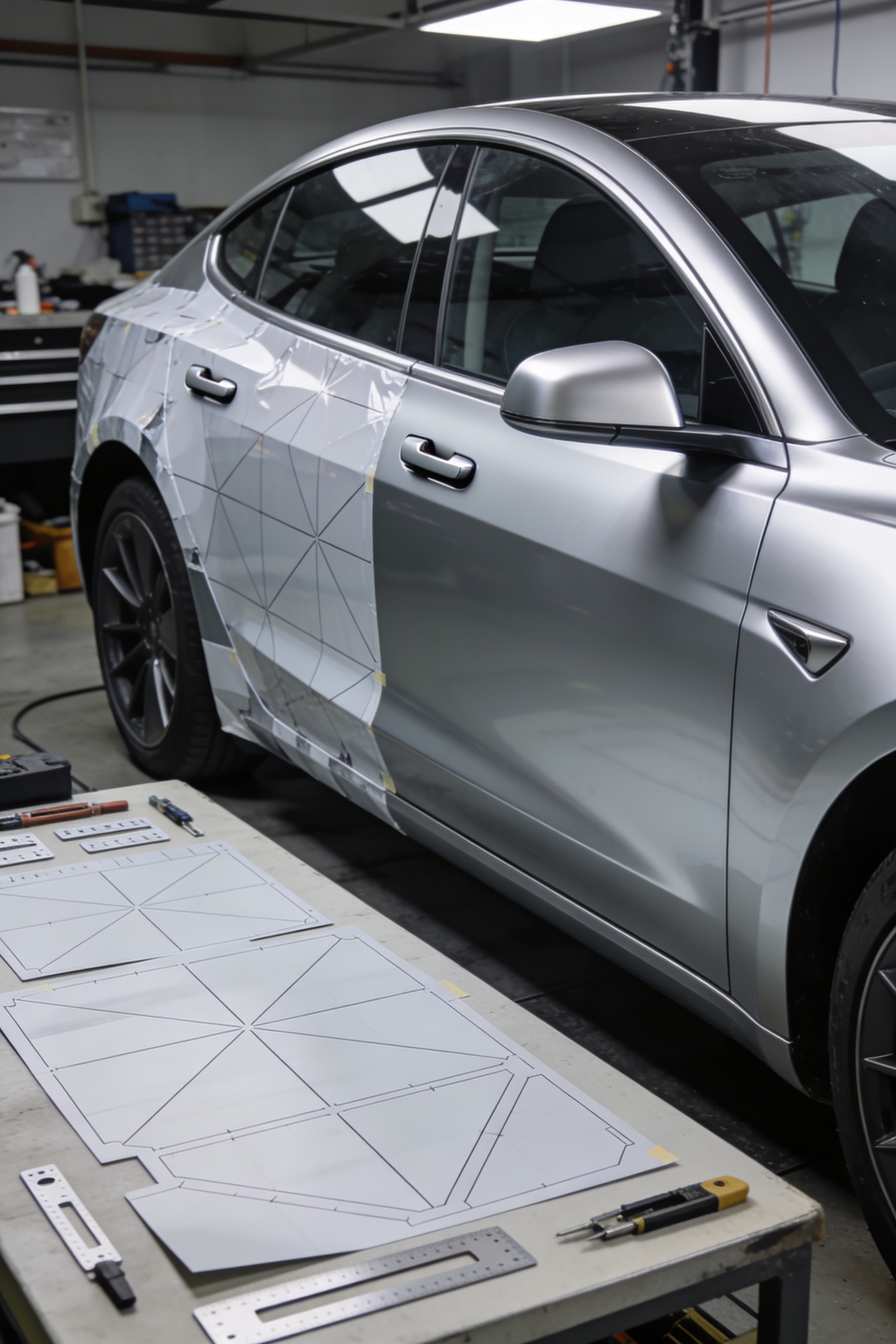
EV Vinyl Wrap Designs: Why Electric Cars Need Different Templates

Here’s the thing—EV wrap templates aren’t just tweaked versions of regular car templates. You’ve got smooth panels that make seams super obvious, charge ports in different spots, and sensor systems that can’t get blocked by vinyl. Plus, every year brings new geometry changes. So using an old template? That’s basically asking for expensive mistakes. EVs are cleaner designs, which actually works in your favor once you’ve got the right template matched to your exact model and year, and if you keep digging into this topic, you’ll discover why that precision matters way more than most people think.
Key Takeaways
- EVs require charge-port and sensor cutouts in different locations than traditional vehicles, necessitating custom templates for proper functionality.
- Smooth EV panels create larger canvas areas but expose seams and installation errors more visibly than textured conventional car surfaces.
- Battery pack placement raises ride height and elongates wheelbase, shifting wrap panel positioning and graphics alignment requirements substantially.
- Model-year production changes affect charge-port positions, sensor placements, and bumper geometry, requiring updated template versions for accurate fitment.
- Specialty vendors use custom scanners to capture exact EV measurements, ensuring template accuracy that prevents costly rework and material waste.
How EV Body Geometry Changes Wrap Template Requirements
Ever notice how electric cars look kind of… different? That’s because they’re built totally different underneath. See, EVs have giant battery packs tucked into the floorpan, which changes everything about how the car sits and moves. This battery placement actually raises the whole vehicle slightly, affecting your wrap template right from the start.
The wheelbase elongation—basically, the distance between front and rear wheels—is stretched way out on most EVs compared to regular cars. That means your wrap panels need repositioning. Plus, the hood pitch, or that angle of the hood, is shallower because there’s no massive engine underneath taking up space. All right, here’s the thing: these geometry shifts mean you can’t just grab a generic template and call it good. You need EV-specific ones to nail the fit perfectly. Just as cargo management accessories require precision-molded designs for specific vehicle trims, vinyl wrap templates must account for the unique dimensional characteristics of each EV platform to ensure proper alignment and coverage.
Recommended Products


🧰 Complete 8-in-1 Professional Tool Kit Includes everything you need for vinyl wrapping and tinting: olecranon edge-closing squeegee, pink heart-shaped edge squeegee, yellow triangular squeegee, 10cm felt squeegee, black edged pen, red film cutter, 9mm utility knife, and wear-resistant gloves. Perfect for both beginners and professionals.
EV-Specific Features That Change Wrap Template Cutouts
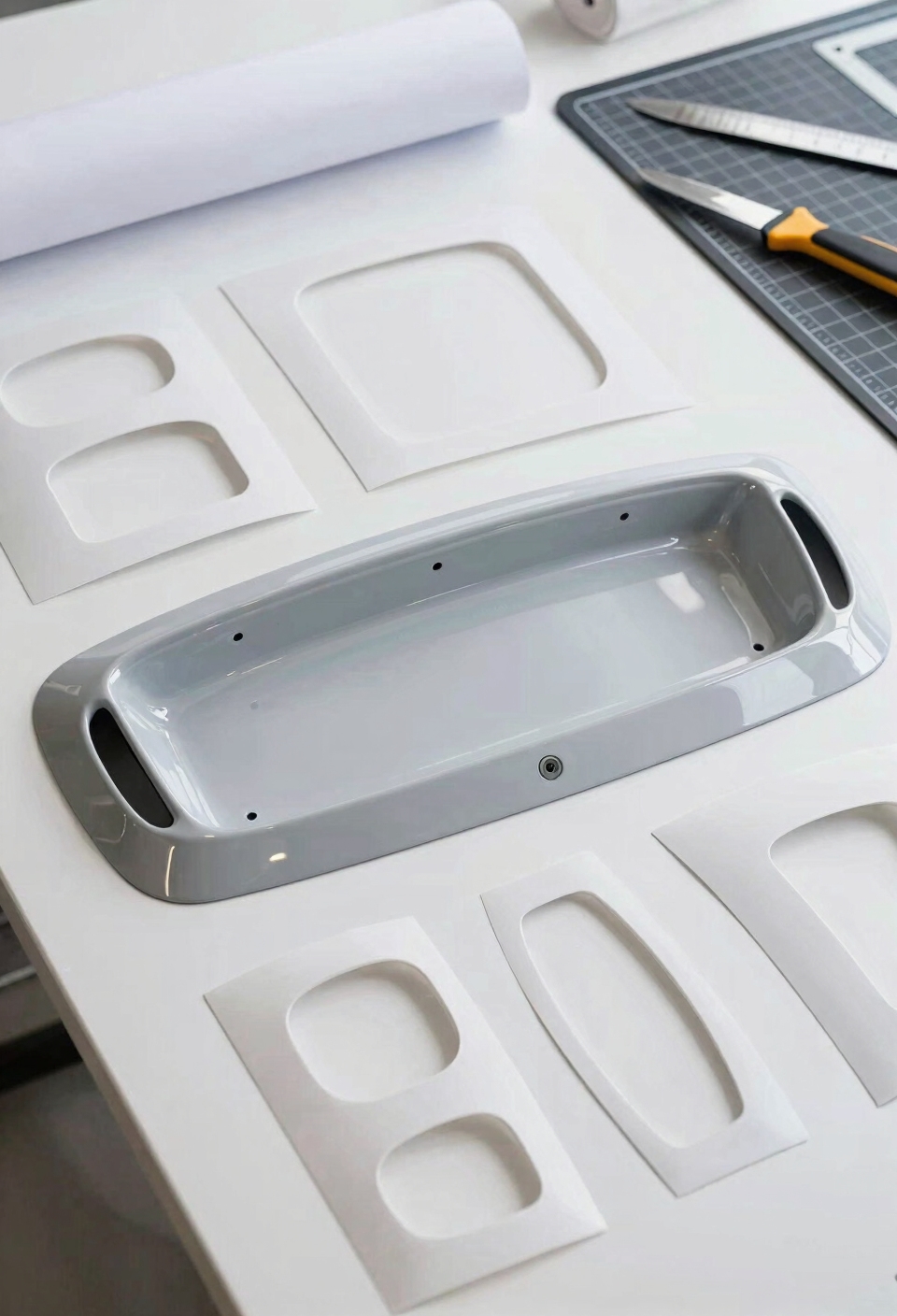
Now that you know how EV shapes are totally different from regular cars, there’s another layer to wrap templates that most people don’t think about—and honestly, it’s the stuff that separates a clean installation from a disaster.
See, EVs have features that regular cars don’t. There’s the charge port, for one. You can’t just wrap over that thing—it needs a precise cutout so the door opens and closes without fighting the vinyl. Then you’ve got sensor clearance to worry about. Those cameras and radar modules tucked into bumpers and fenders? They can’t be covered or blocked because they’re basically the car’s eyes. Get those margins wrong, and you’re looking at a failed wrap and frustrated owners. Just as color-coded and labeled wires simplify proper connections in aftermarket installations, precise cutout templates ensure that EV-specific components like charge ports and sensor arrays function without obstruction or damage.
What Makes EV Templates Different From Conventional Vehicle Templates
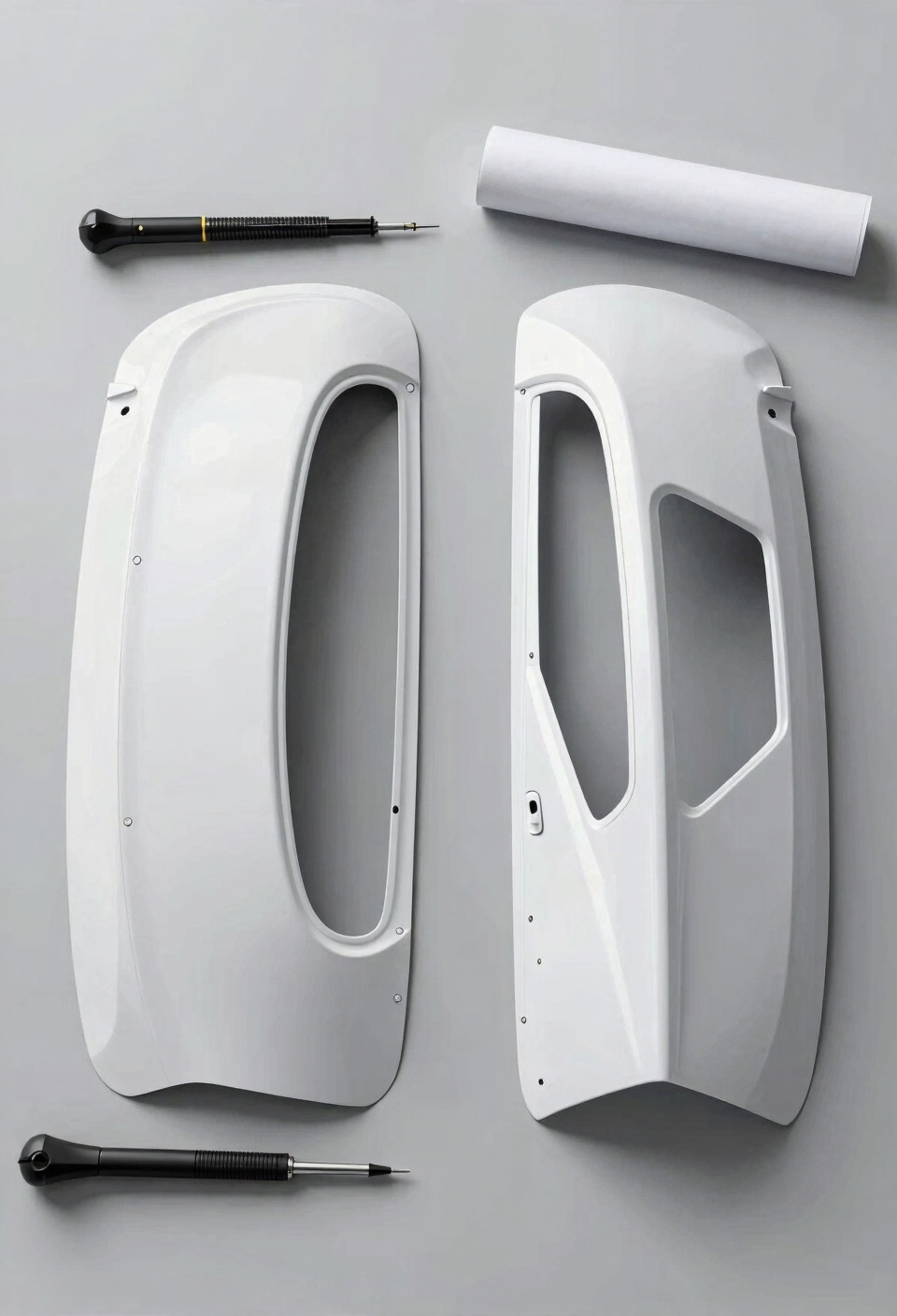
The gap between wrapping a regular gas car and wrapping an electric vehicle comes down to one thing: EVs are built totally differently underneath, and that changes everything about how you plan a wrap.
See, gas cars have big engines up front, so their hoods are tall and their wheelbases are shorter. EVs? They’ve got flat battery packs underneath, which means longer wheelbases and lower profiles. That difference alone messes with your graphics alignment and edge tolerances.
Now here’s where it gets technical. EV panels are smoother and larger, so thermal expansion hits differently—the film expands and contracts more noticeably on those big flat surfaces. Plus, adhesive chemistry works differently on modern EV materials. Modern vinyl wraps must account for the weather-resistant exterior customization requirements that electric vehicles demand due to their sleeker aerodynamic designs. You can’t just grab any template and expect it to work. You need something designed specifically for how EVs are actually built.
Common Installation Failures: How Template Errors Compound Costs
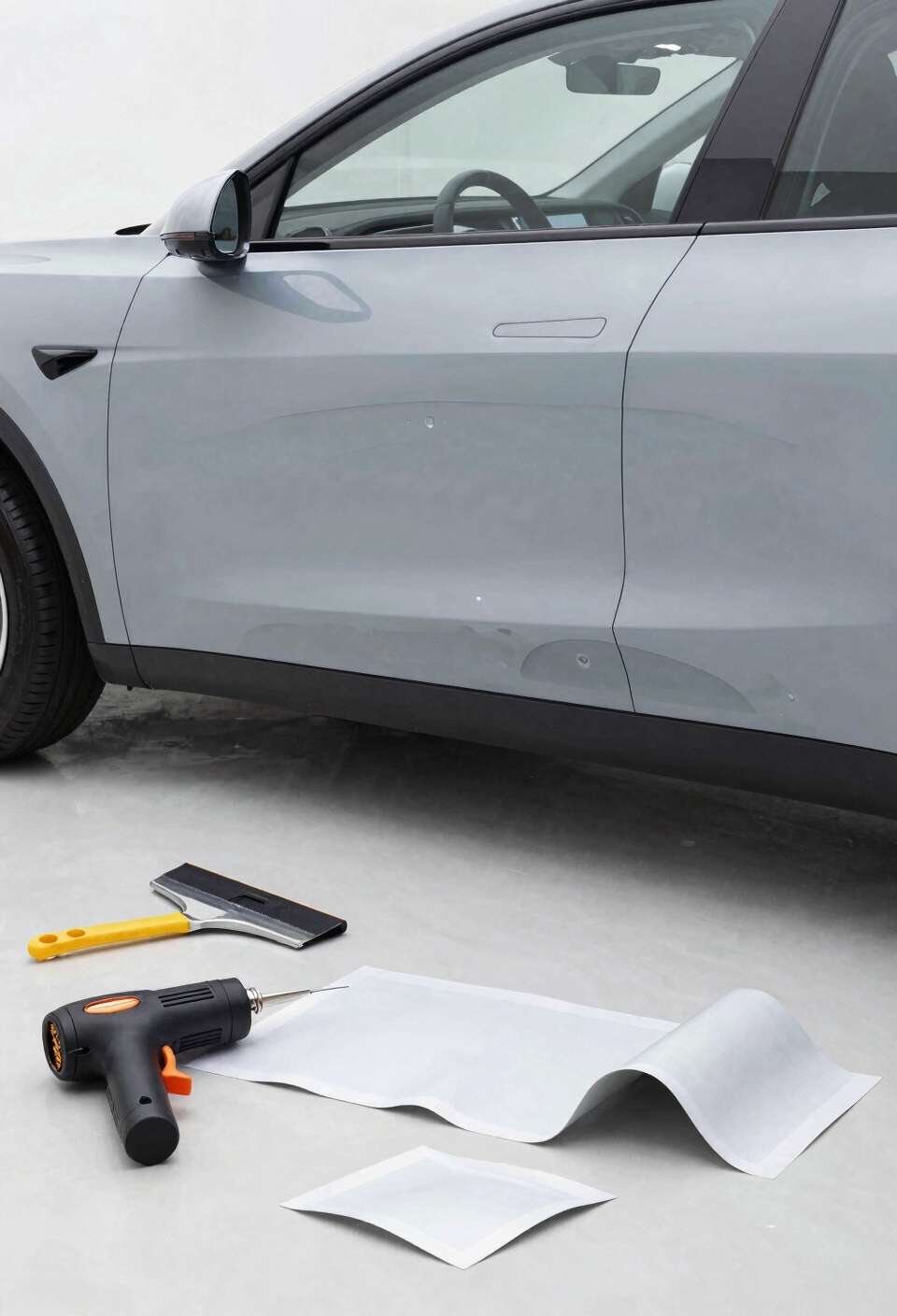
When you mess up a template on an EV wrap, you’re not just wasting some vinyl—you’re starting a domino effect that’ll drain your wallet way faster than you’d think. A misaligned charge-port cutout? Now the installer has to stop, heat, peel, and reposition everything. That’s serious labor delays right there. Missing sensor margins means you’ve got to reprogram the entire side panel, eating hours of work. And here’s the thing—EV panels are so smooth and clean that every mistake shows like a neon sign. You’re looking at material waste from botched cuts, reprinting costs, and frustrated customers who won’t come back. Similar to how manufacturing issues across products like misaligned holes can compromise the integrity of workshop equipment, template errors in EV wraps create compounding failures that affect both the immediate installation and long-term client relationships. All it takes is one sloppy template to turn a profitable job into a money pit.
Recommended Products

40 in 1 Car Wrapping Kit: Widely using in vinyl wraps application, car window tinting, contact paper installation, wallpaper installation, Paint protection film installation, solar film & vinyl wrap car installations. Vinyl wrap kit suitable for vehicle, family, garage, office or warehouse.

PROFESSIONAL VINYL WRAP TOOL KIT: Professional all-in-one tool kit designed for car vinyl wrapping, window tinting, paint protection film (PPF) and decal application. Includes all essential tools: vinyl cutter, utility knife, wrap magnets, micro squeegees, felt squeegees, PPF squeegees and more. Complete, reliable and highly practical, it’s perfect for both professional installers and DIY enthusiasts.
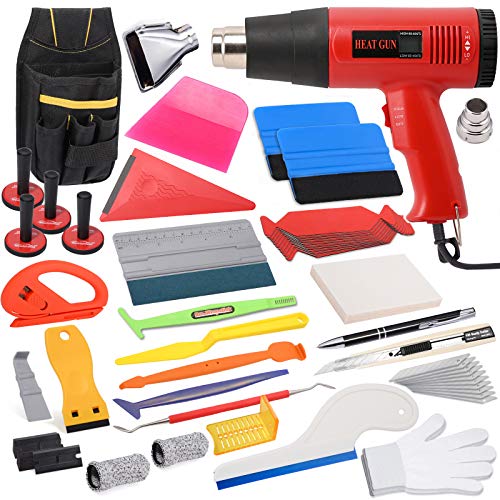
Car Wrapping Kit is widely using in Vinyl wraps application, Car window tinting, Contact paper installation, Wallpaper installation, Paint protection film installation, Solar film & vinyl wrap car installations. Vinyl wrap kit suitable for vehicle, family, garage, office or warehouse.
Why Seams Show on Smooth EV Panels
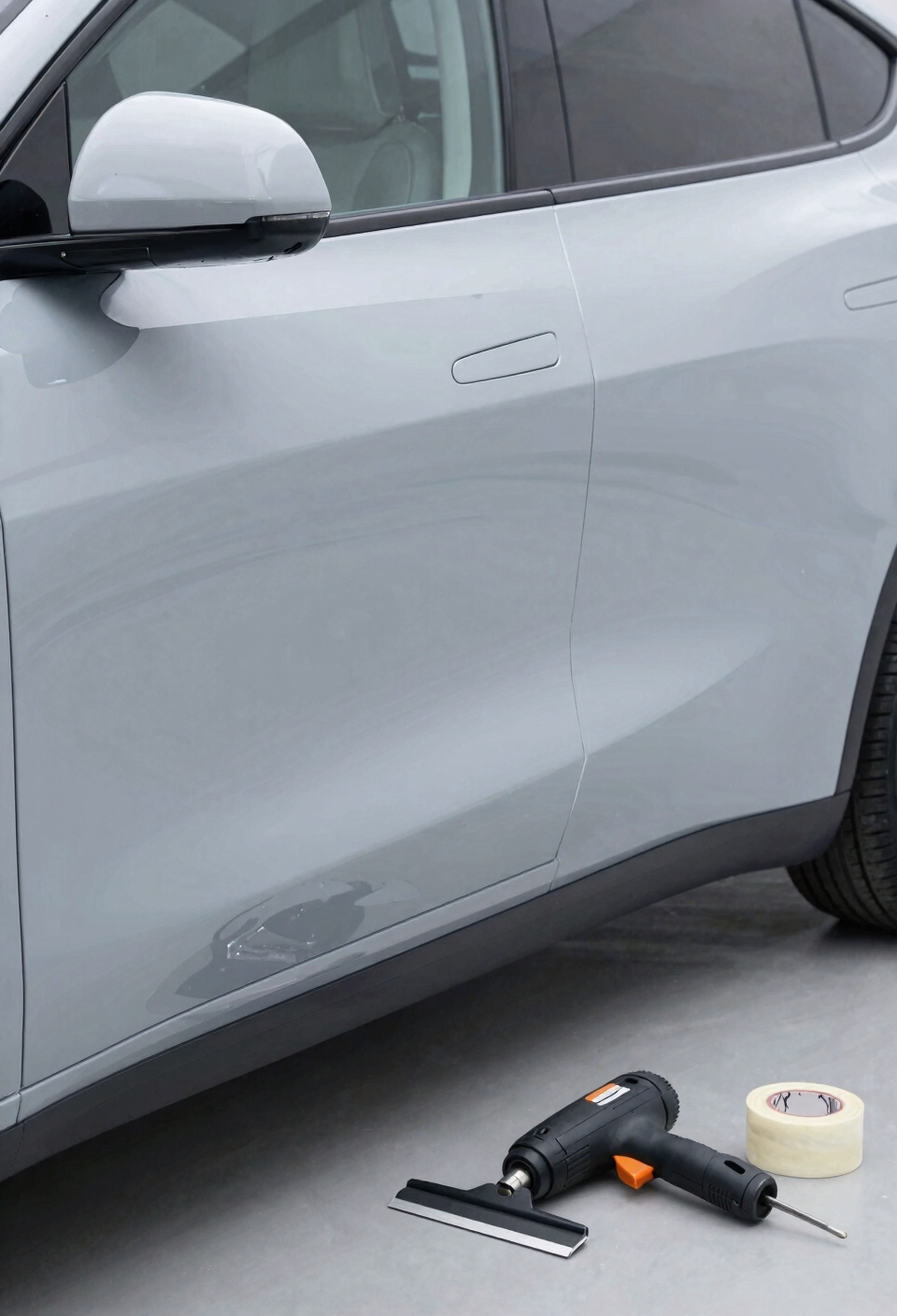
Once you’ve got all those template cuts locked in and the vinyl hits the panel, here’s where EV wraps reveal their biggest headache: seams that stick out like they’re glowing. Here’s why. Traditional cars have tons of body creases, trim lines, and texture that naturally hide seams. EVs? They’re basically smooth canvases with barely any visual breaks. That means your visible seams become super obvious—they catch light differently and draw your eye straight to them. Edge lifting makes it worse. When film doesn’t fit perfectly, edges curl up and create shadows that make seams even more noticeable. One tiny misalignment on a gasoline car? You’d never notice. Same mistake on an EV, and everyone sees it. That’s why precision templates matter so much. Just as premium protective coatings on carbon fiber accessories prevent UV damage and maintain appearance, vinyl wraps require similarly careful surface preparation and alignment to avoid visible imperfections on smooth EV panels.
Why EV Wrap Templates Change Year to Year
If you’ve ever tried using last year’s template on a brand-new EV model, you’ve probably discovered that they don’t quite line up—and that’s not a coincidence. Here’s the thing: EV manufacturers tweak their designs constantly. Between model year changes, they’ll shift where charge ports sit, move sensor placement around, or adjust bumper geometry entirely during production. I mean, even small code changes in how a door aligns can throw off your whole wrap fitment. That’s why revision tracking matters so much—wrap shops need to know exactly which year and update they’re working with. Without current templates, you’re basically guessing where everything goes, and that leads to wasted film and frustrated installers. For example, vehicle-specific accessories like all-weather floor mats designed for precise fitment demonstrate how manufacturers alter interior and exterior dimensions between model years, a principle that equally applies to wrap template accuracy. Stay updated, stay accurate.
Where to Find Model-Specific EV Wrap Templates
So where do you actually *find* these templates that actually match your EV? Here’s the thing—you’ve got options, and they’re easier to access than you’d think. Stock libraries like Adobe Stock and Shutterstock have thousands of vehicle templates, including EV-specific ones organized by year and model. These platforms are solid if you’re browsing quickly. Now, if you want something more precise, specialty wrap-template vendors are your move. They use custom scanners to capture exact measurements of specific EV models, which means you’re getting accuracy built in. I mean, that’s the whole point, right? Professional wrap shops often subscribe to these vendor libraries because they know the fitment will actually work. Just as protective covers shield car audio components from dust and accidental contact during installation, accurate wrap templates protect your investment by ensuring proper fitment from the start. The cost varies, but honestly, investing in the right template saves you major headaches during installation.
Recommended Products
Note: This Customized steering wheel cover is only suitable for the same type of steering wheel as in the picture. Please compare your steering wheel with the picture...
How Clean EV Design Simplifies Precision Template Installation
Now that you know where to grab solid templates, here’s something that actually makes your job easier: electric vehicles are built different, and that difference is a *good* thing when you’re trying to wrap one. See, most EVs have these smooth, uninterrupted side panels and minimal grille areas—basically fewer visual “breaks” interrupting the design. That surface continuity means you’ve got larger canvas zones where your wrap can stretch without fighting weird angles or trim clutter. Even better, those clean lines give you solid edge anchoring points where the film naturally wants to sit and stay put. No confusing curves fighting your installation. I mean, that’s the opposite of frustrating. Your template becomes way more forgiving because the vehicle’s geometry actually *cooperates* with precision wrapping instead of working against it. Unlike traditional vehicles where simple installation methods require careful navigation around complex trim elements, EVs eliminate many of these obstacles through their minimalist design philosophy.
Recommended Products


Fit stock plastics of models: Surron Sur-Ron Light Bee X with DNM Fork 2017 2018 2019 2020 2021 2022 2023 2024(plastics or seat cover are NOT included. This is a graphics set only).

1985-2000 XR 100 SURGE Red Senge Graphics Kit Compatible with Honda. The photo shown shows the exact decals you will receive. Please refer to the photo to make sure you are getting the exact amount of coverage you want. You can toggle between base, complete, and rider I.D. to see all of the differences.
Frequently Asked Questions
Can I Use a Tesla Model 3 Wrap Template on a Model Y?
I wouldn’t recommend it. Though both are Teslas, the Model Y’s longer wheelbase and taller roofline create significant fit differences, and mirror placement varies between models. You’ll risk misalignment and wasted material.
How Do Charge-Port Cutouts Affect Wrap Film Durability Over Time?
Charge port flexing stresses film edges around cutouts, creating micro-tears. I’ve found sealant degradation accelerates this wear, letting moisture penetrate seams and compromising longevity where protection matters most.
What’s the Cost Difference Between Generic and Ev-Specific Wrap Templates?
I’ve found that generic templates are like using a map from another country—they’ll cost you less upfront, but EV-specific templates justify their premium through reduced material costs and lower labor rates during installation.
Do Sensor Arrays Require Special Wrap Materials or Adhesive Types?
I’d recommend standard vinyl wrap materials for sensor protection, but you’ll want adhesive compatibility tested on your specific EV’s bumper and fascia coatings. Most premium wraps work fine—just avoid aggressive removable adhesives near sensitive electronics.
How Often Should Fleet Managers Update Their EV Wrap Template Libraries?
I’d recommend an annual refresh of your EV wrap template library to capture model-year changes and sensor updates. Consider seasonal adaptations for different climate regions and trim variations that manufacturers introduce mid-cycle.
Conclusion
Here’s the thing—you picked the perfect time to learn about EV wraps. Just when you thought vinyl was figured out, electric cars showed up and changed everything. Get your templates right, and you’ve got a flawless custom look. Mess it up, and you’re basically throwing money away. So grab those model-specific templates, take your time, and you’ll nail it. Your EV deserves better than guesswork anyway.