As an Amazon Associate, we earn from qualifying purchases. Some links on this site are affiliate links at no extra cost to you. Our recommendations are based on thorough research and editorial judgment.

Carbon Fiber Steering Wheel Covers: How to Find the Right Fit

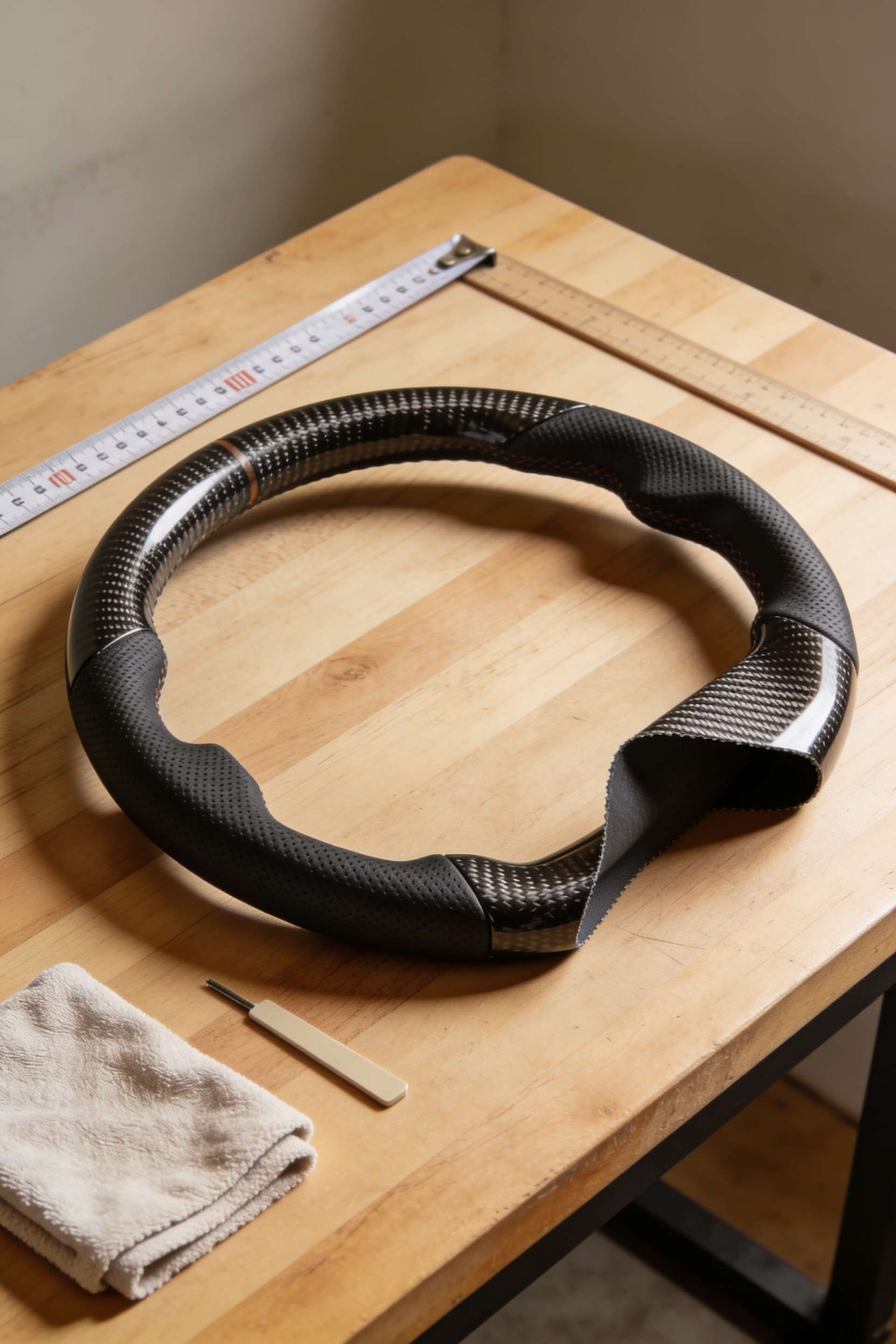
finding the right carbon fiber steering wheel cover comes down to three things—measuring your wheel accurately, knowing if it’s round or flat-bottomed, and picking between snap-on or stitched installation. You’ve gotta match your vehicle’s year, make, and model, then verify those measurements against the product specs before buying. Get the fit wrong, and you’re stuck with a cover that slides around like it’s on ice. Stick around to discover exactly how to nail each step.
Key Takeaways
- Measure your steering wheel horizontally and vertically from outer edge to outer edge to determine exact diameter and ensure proper fit.
- Identify whether your wheel is round or flat-bottom, as flat-bottom wheels require different covers to prevent bunching and sliding.
- Verify your vehicle’s year, make, and model, since small size differences between 14.5, 15, and 15.5 inches significantly affect safety and grip.
- Choose between snap-on (quick installation) or stitched (permanent security) installation methods based on your preference for convenience versus long-term durability.
- Select real carbon fiber for premium feel and durability or faux carbon fiber for affordability, ensuring UV protection to prevent fading.
Measure Your Steering Wheel: Horizontal and Vertical
Before you even think about ordering that sleek carbon fiber steering wheel cover, you’ve got to nail down one essential detail: the actual size of your wheel. I know, I know—it sounds boring, but trust me, getting this right saves you from the frustration of receiving a cover that doesn’t fit.
Here’s the thing: you need to measure angles from outer edge to outer edge, both horizontally and vertically. Grab a measuring tape and check both directions—they should match if your wheel is round. Now, assess thickness too, because some wheels have slightly different builds. Standard wheels typically measure between 14.5 and 15.5 inches. Taking five minutes now means your cover fits perfectly later. That’s the move.
Keep in mind that universal fit options claim to cover 99% of car models, but verifying your exact measurements against product specifications ensures you won’t end up with a cover that slips or gaps around your wheel.
Is Your Wheel Round or Flat-Bottom?
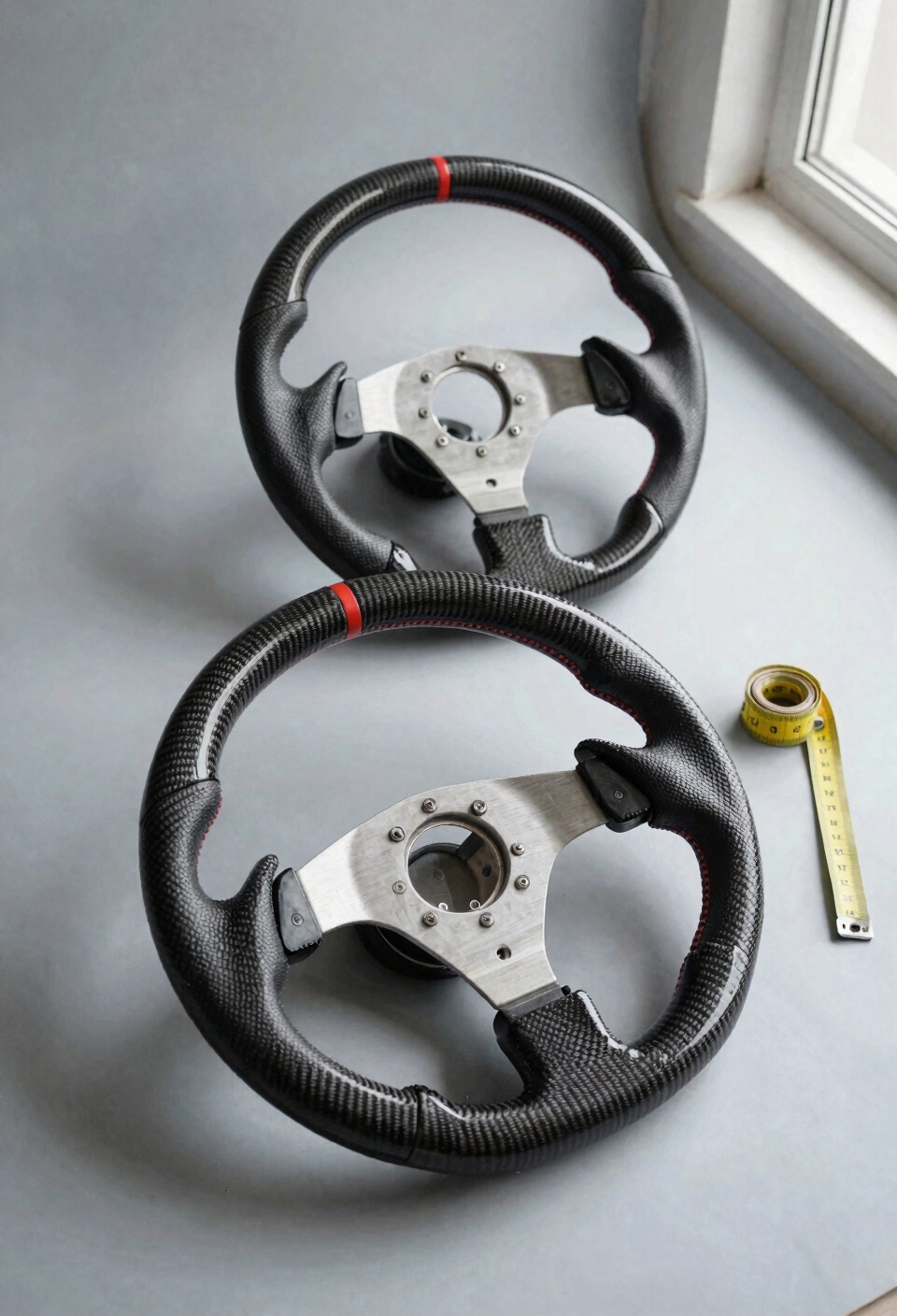
Now that you’ve got your measurements locked in, here’s something you might not have thought about: not all steering wheels are actually round.
I mean, some wheels have a flat section at the bottom—you know, where your legs are. That flat bottom detection matters because it changes how a cover fits. A standard round wheel needs equal measurements on both sides, but a flat-bottom wheel? That’s different ergonomically.
Here’s why this matters for you: if you buy a cover designed for round wheels and your wheel’s got that flat section, the cover won’t sit right. It’ll bunch up or slide around, which defeats the whole purpose of protection and grip. Before you buy, check whether your wheel is totally round or if it’s got that flat bottom cut out. It’s honestly the difference between a perfect fit and total frustration.
Pairing your steering wheel cover with JDM racing seat accessories can create a cohesive interior aesthetic that enhances both comfort and authentic Japanese automotive styling throughout your vehicle.
Steering Wheel Cover Materials: Aesthetics vs. Cost
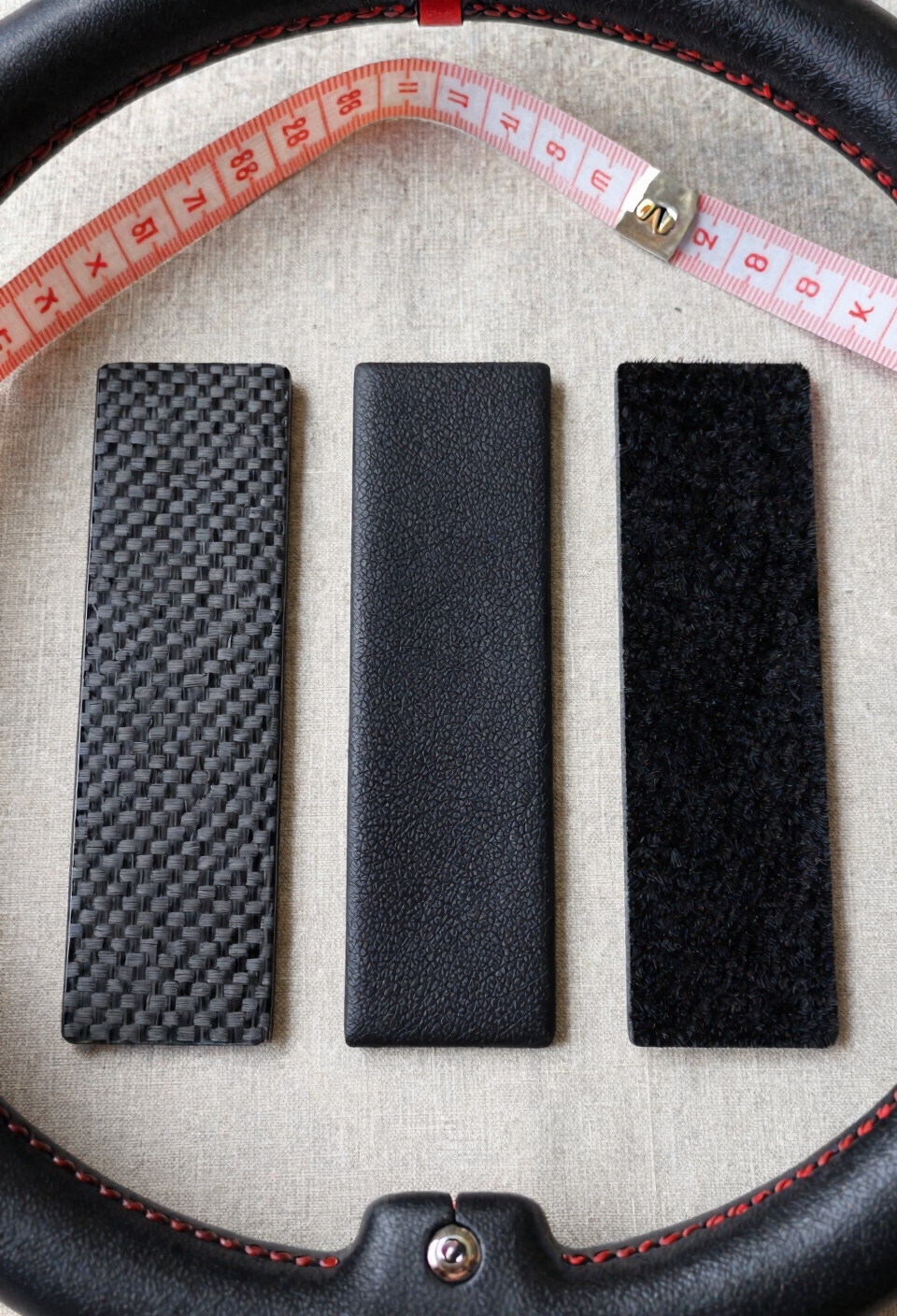
You’ve probably noticed that steering wheel covers come in wildly different price ranges, and honestly, a lot of that difference comes down to what they’re actually made from. I mean, a carbon fiber *look* cover costs way less than real carbon fiber with leather, right? The budget option gives you that sleek aesthetic without draining your wallet, though weight differences matter too—genuine materials feel premium but heavier. Now, color comparisons get interesting because faux carbon fiber comes in red, blue, and black variations, while authentic composites stick to classic tones. Like other carbon fiber accessories, steering wheel covers typically showcase the superior strength-to-weight ratio that makes premium materials worth considering for long-term durability. Here’s the thing: you’re basically choosing between looking cool affordably or investing in durability and that genuine high-end vibe. Both protect your wheel, honestly. It just depends on your priorities and budget.
Carbon Fiber Look vs. Real Carbon Fiber: Which Fits Your Budget?
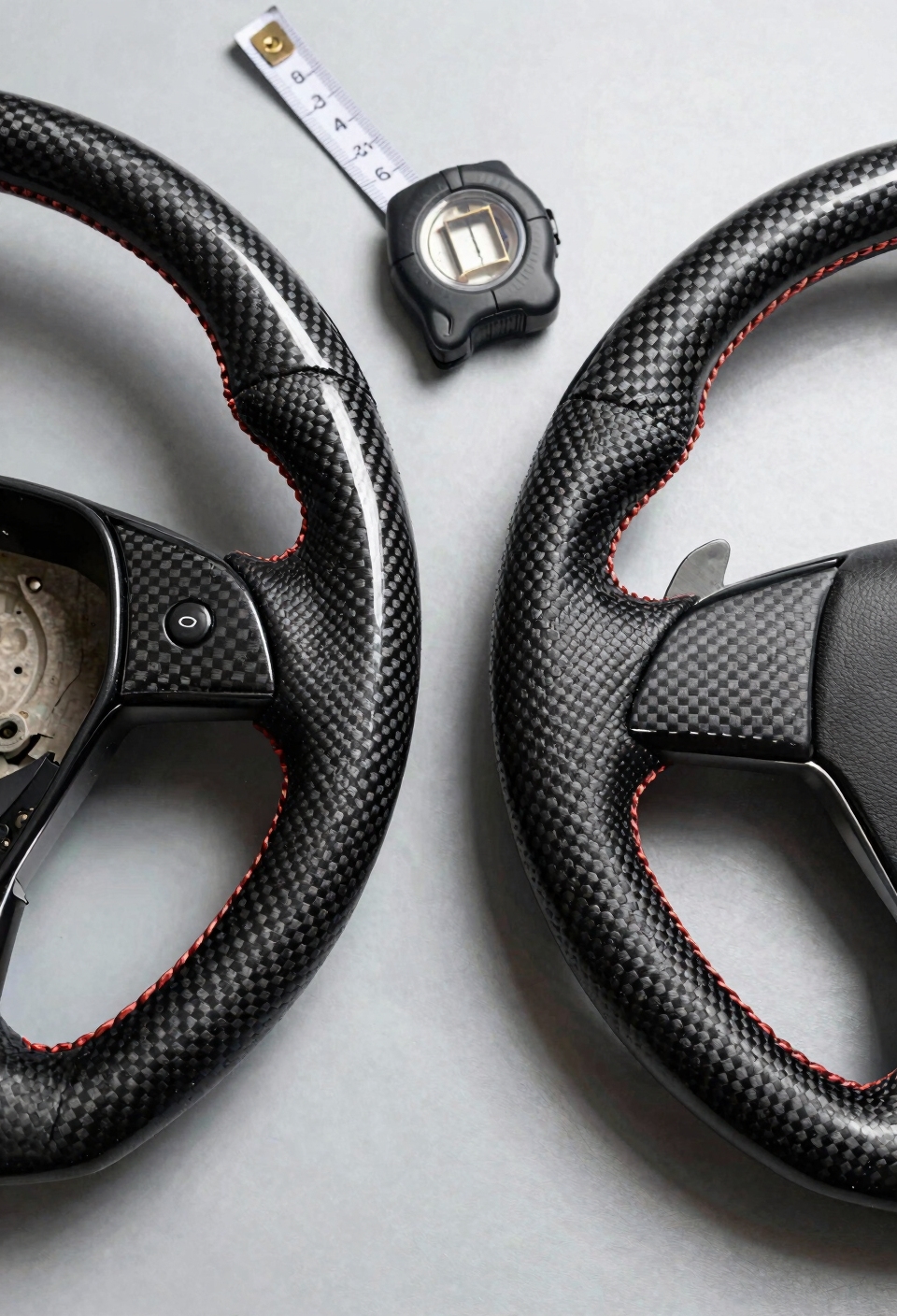
Let me break down the actual difference between these two options, because it’s way more interesting than you might think. Carbon fiber look covers use printed or textured material that mimics the real deal—they’re affordable and look genuinely sleek. Real carbon fiber, though? That’s actual woven material that costs way more upfront. Now, here’s where budget comparison gets real: the carbon fiber look gives you 80 percent of the visual appeal for a fraction of the price. I mean, unless you’re planning to resale your car to someone obsessed with authentic materials, most people won’t notice. Real carbon fiber holds resale value better if you’re upgrading a premium vehicle, but honestly, for most drivers, the look-alike option wins the budget battle while keeping your steering wheel protected and stylish. Many carbon fiber covers include UV protection to prevent the material from fading over time, which is an important consideration when comparing long-term durability between genuine and replica options.
Snap-On or Stitched Installation: What’s Best for Your Wheel?
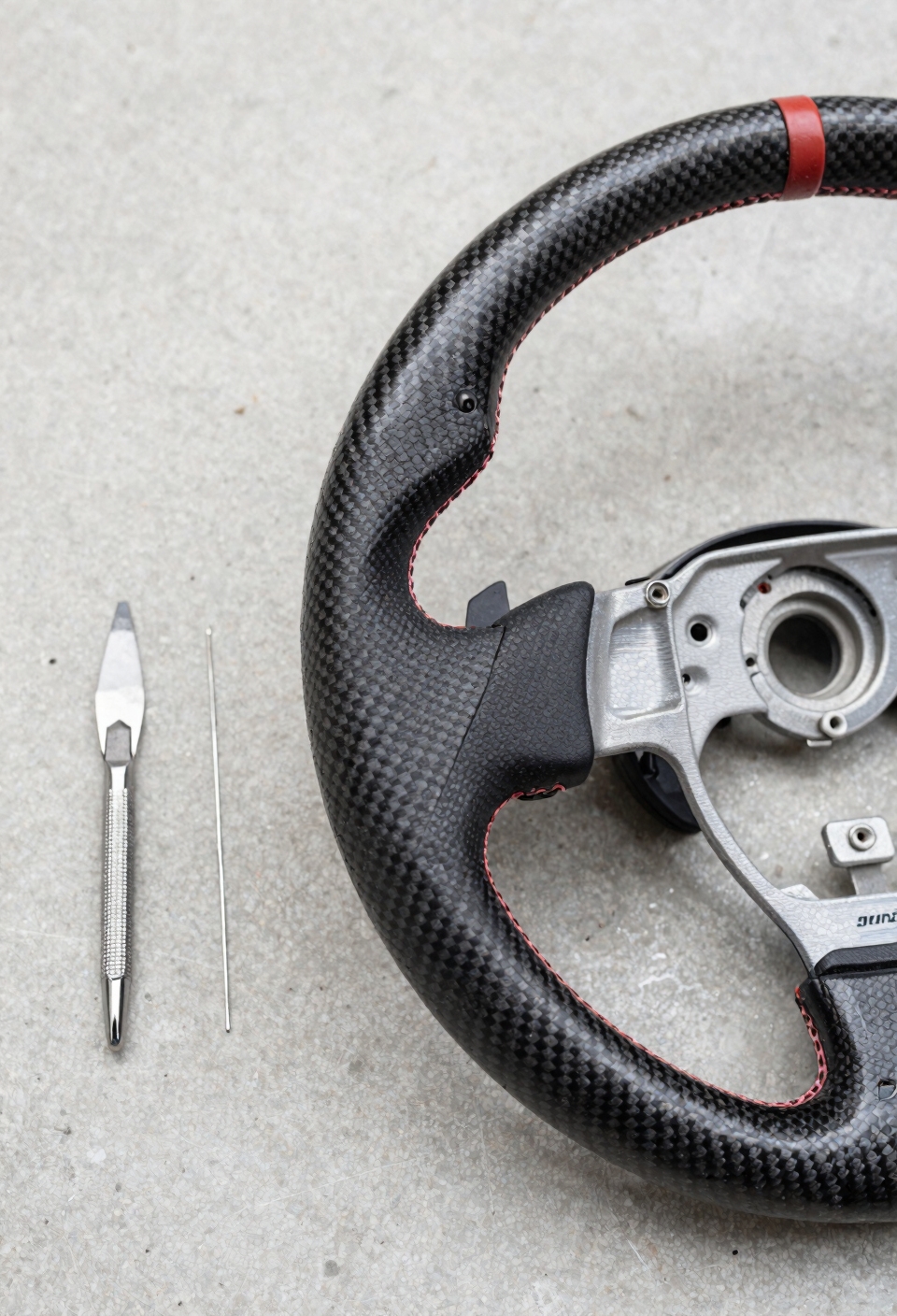
Once you’ve picked your carbon fiber cover, the real question becomes: how do you actually attach it to your wheel? You’ve got two main options: snap-on or stitched.
Snap-on covers are faster—seriously, installation time is basically minutes. You align them with your existing wheel stitching and secure them into place. The catch? They might shift over time, so long term maintenance means checking them occasionally.
Stitched installation takes longer but gives you permanent security. You’re wrapping the cover around your wheel and needle-threading it, which sounds intense but locks everything down. No slipping, no readjusting.
I’m sure you’re wondering which fits you better. If you want quick and easy, snap-on’s your move. Want something rock-solid that’ll stay put? Go stitched. Both work—it just depends on your patience and how long you want that cover staying exactly where you put it. Keep in mind that installation effort varies significantly between these two methods, so factor in your comfort level with DIY work before committing to either option.
Match Your Vehicle’s Year, Make, and Model for Perfect Fitment
Now, here’s where a lot of people mess up: they’ll grab a carbon fiber cover that looks amazing, install it perfectly with either snaps or stitches, and then wonder why it doesn’t fit right. The secret? Vehicle compatibility matters more than you’d think.
Your car’s year, make, and model determine the exact steering wheel size you need. I’m talking 14.5, 15, or 15.5 inches—small differences that make huge impacts. A cover that’s even slightly off won’t grip properly, and that’s a safety issue when you’re driving.
Just like seat gap fillers require measuring gaps between seats to ensure perfect fit and avoid wasted space, steering wheel covers demand precise measurements before purchase.
Before buying anything, use your fitment checklist: know your vehicle’s specs first. Check your car’s manual or measure your current wheel. Getting the right match means your carbon fiber cover actually stays put and looks sharp for years.
Verify Fitment Before Purchasing
Before you hit “buy now” on that sick carbon fiber steering wheel cover, you’ve gotta actually verify it’ll fit your specific car—and I mean really verify it, not just guess. Here’s your fit confirmation safety checklist: grab a measuring tape and measure your wheel from outer edge to outer edge, both across and up-and-down. You’re looking for measurements between 14.5 and 15.5 inches. Now, here’s the thing—round wheels need matching measurements on both sides, so don’t slack on that. Write down your exact numbers, then match them to what the cover specs say. I know it sounds tedious, but getting this right prevents slippage and keeps you safe while driving. Similar to how screen protectors require precise installation to avoid bubbles and misalignment, steering wheel covers demand careful measurement to ensure proper fitment and optimal safety performance. Trust me, ten minutes now saves serious headaches later.
Durability and Grip: How Long Will Your Cover Last?
You’ve measured your wheel, you know it fits—great! Now comes the real question: how long’s this thing actually going to last?
Here’s the deal—your cover’s durability depends on the material you picked. Carbon fiber look covers with that flexible, non-slip red material? They’re built for wear resistance. I mean, they’re literally designed to take the punishment your hands dish out daily. All right, leather composite options last even longer because they’re tougher against UV damage and general deterioration. Like premium accessories made from zinc alloy and ABS plastic, quality steering wheel covers benefit from advanced finishing techniques that enhance their longevity and performance.
The tactile longevity is honestly impressive. You’re looking at months of consistent grip quality before any noticeable wear shows up. The stitched designs hold up better long-term than snap-on versions, obviously. I’ve seen quality covers outlast people’s enthusiasm for their cars. That’s the real test.
Use Custom Photo Matching for Precision Fitment
If you’ve ever tried to buy something online and had it show up completely wrong, you know how frustrating that is—and steering wheel covers are way too expensive to gamble on. That’s where custom photo matching saves you. Here’s how it works: you upload photos of your actual steering wheel, and the company uses photo templates to analyze your wheel’s exact shape, size, and design details. Their pattern matching technology examines everything—the buttons, stitching, curves, and gauge placement. This precision approach means your custom cover isn’t just a guess; it’s built specifically for your wheel. You’re getting a replica that actually fits, not something that slides around or looks weird. Similar to how color-coded and labeled wires simplify installation by reducing errors, properly matched steering wheel covers eliminate the guesswork in fitment. That’s real confidence right there.
Frequently Asked Questions
Can I Install a Steering Wheel Cover Myself, or Do I Need Professional Help?
I’ll help you install your steering wheel cover yourself—it’s totally doable! Snap-on designs are easiest for DIY installation, while stitched versions might benefit from professional assistance if you’re uncomfortable with needle-threading techniques.
How Do I Clean and Maintain My Carbon Fiber Steering Wheel Cover Properly?
I’d recommend establishing a regular cleaning schedule using a leather conditioner or appropriate cleaner to maintain your cover’s grip and appearance. Apply protective treatments quarterly to shield against UV exposure and wear from daily driving.
Will a Steering Wheel Cover Damage or Affect My Airbag Functionality?
Your cover shouldn’t be a ticking time bomb for airbag safety. I’ve verified that properly fitted covers don’t create airbag interference through rigorous safety testing. Snap-on designs particularly guarantee your system deploys flawlessly when needed.
What’s the Warranty Coverage if My Cover Wears Out Prematurely?
I don’t have specific warranty duration details in my knowledge base, but I’d recommend checking your product documentation. Most quality covers include replacement processes for defects, though wear from normal use typically isn’t covered under standard warranties.
Can I Remove and Reuse My Steering Wheel Cover on a Different Vehicle?
I’d say you can’t reliably reuse your cover—fits vary markedly between vehicles, and color matching becomes problematic. You’d likely need a new cover sized for your different steering wheel’s specific dimensions.
Conclusion
So here’s the thing—finding your perfect carbon fiber cover comes down to being precise with your process. You’ve got to measure methodically, match your model meticulously, and pick the perfect material for your budget. Whether you’re going for real carbon fiber or just the look, you’re basically upgrading your grip and your ride’s appearance simultaneously. Take your time, double-check details, and you’ll drive off totally satisfied.