As an Amazon Associate, we earn from qualifying purchases. Some links on this site are affiliate links at no extra cost to you. Our recommendations are based on thorough research and editorial judgment.

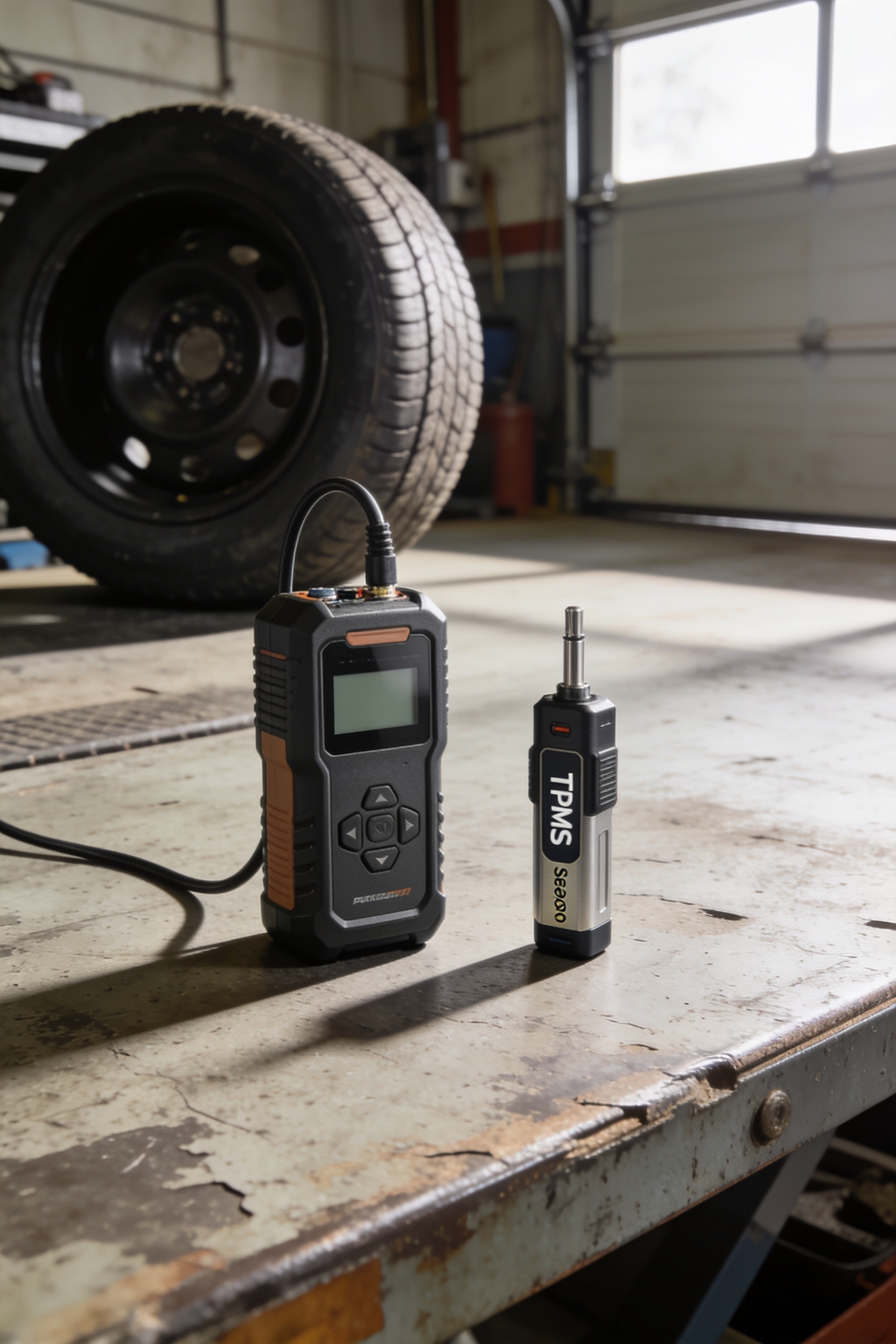
Tire Inflators vs TPMS: Which Should You Carry First?

You’ve probably wondered which one actually matters more—your TPMS or a portable inflator. Here’s the thing: they’re a team, not competitors. Your TPMS catches the problem by alerting you when pressure drops, but it can’t fix anything—it’s basically a smoke detector. Your inflator’s the real hero because it actually adds air and solves the crisis right there on the road. Carry both, but grab the inflator first for trips; it’s your insurance against getting stranded. Stick around to discover why your tire gauge might read differently than your inflator.
Key Takeaways
- TPMS detects pressure drops first; carry both tools since each performs a single, essential role.
- Portable inflator corrects low pressure roadside; TPMS alone cannot add air or prevent tire damage.
- Pack inflator before long trips or seasonal storage to avoid relying solely on TPMS alerts.
- Use handheld gauge to verify tire pressure after inflating, as inflator hose volume causes reading variance.
- TPMS alerts you to a problem; inflator solves it—both are necessary for complete tire safety.
TPMS Monitors; Inflators Correct: Here’s the Critical Difference
You may be interested
Ever noticed that warning light pop up on your dashboard while you’re driving, and you’re suddenly wondering if your tire’s about to explode? That’s your TPMS doing its job—but here’s the thing: it’s only giving you a heads-up, not fixing anything.
Your TPMS is basically a sensor system that watches your tire pressure constantly. When pressure drops below alert thresholds, it sends a warning. Pretty cool, right? But there’s sensor latency to bear in mind—sometimes there’s a tiny delay before you get that alert. The real problem? TPMS can’t actually add air back into your tire. It’s like having a smoke detector that screams when there’s fire but doesn’t put it out.
That’s where your inflator comes in. I mean, that’s literally its whole purpose—restoring pressure so you’re actually safe. Proper tire maintenance also requires you to verify power cable gauge matches your vehicle’s electrical system to ensure any portable inflator operates at peak efficiency without voltage drops.
Why Your TPMS Can’t Fix a Low Tire
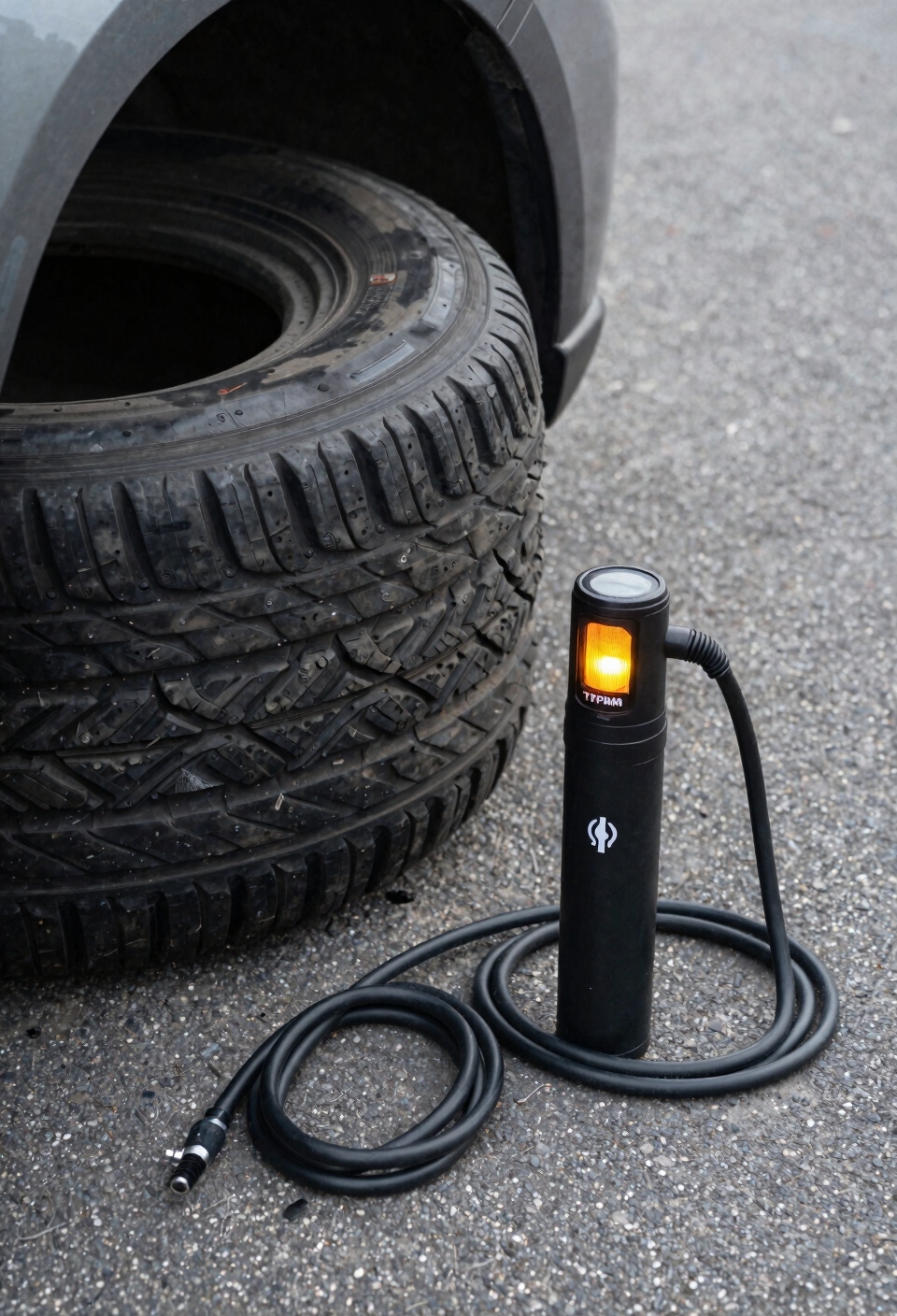
At this point, you’ve probably realized something important: your TPMS is basically a messenger, not a mechanic. It’s like having a smoke detector—super useful for alerting you to danger, but it won’t put out the fire. Your TPMS sensor detects when pressure drops and sends you a warning. That’s literally all it does. It can’t add air to your tire, obviously. Even if your sensor has a fresh battery replacement and zero sensor tampering issues, it’s still just watching and reporting. Once that alert pops up on your dashboard, you’re on your own to actually fix it. Keep your tire inflator and microfiber towels easily accessible in your vehicle for quick roadside maintenance and cleanup. That’s exactly why you need a tire inflator sitting in your car. Your TPMS spots the problem; your inflator solves it.
What to Do When Your TPMS Alerts You
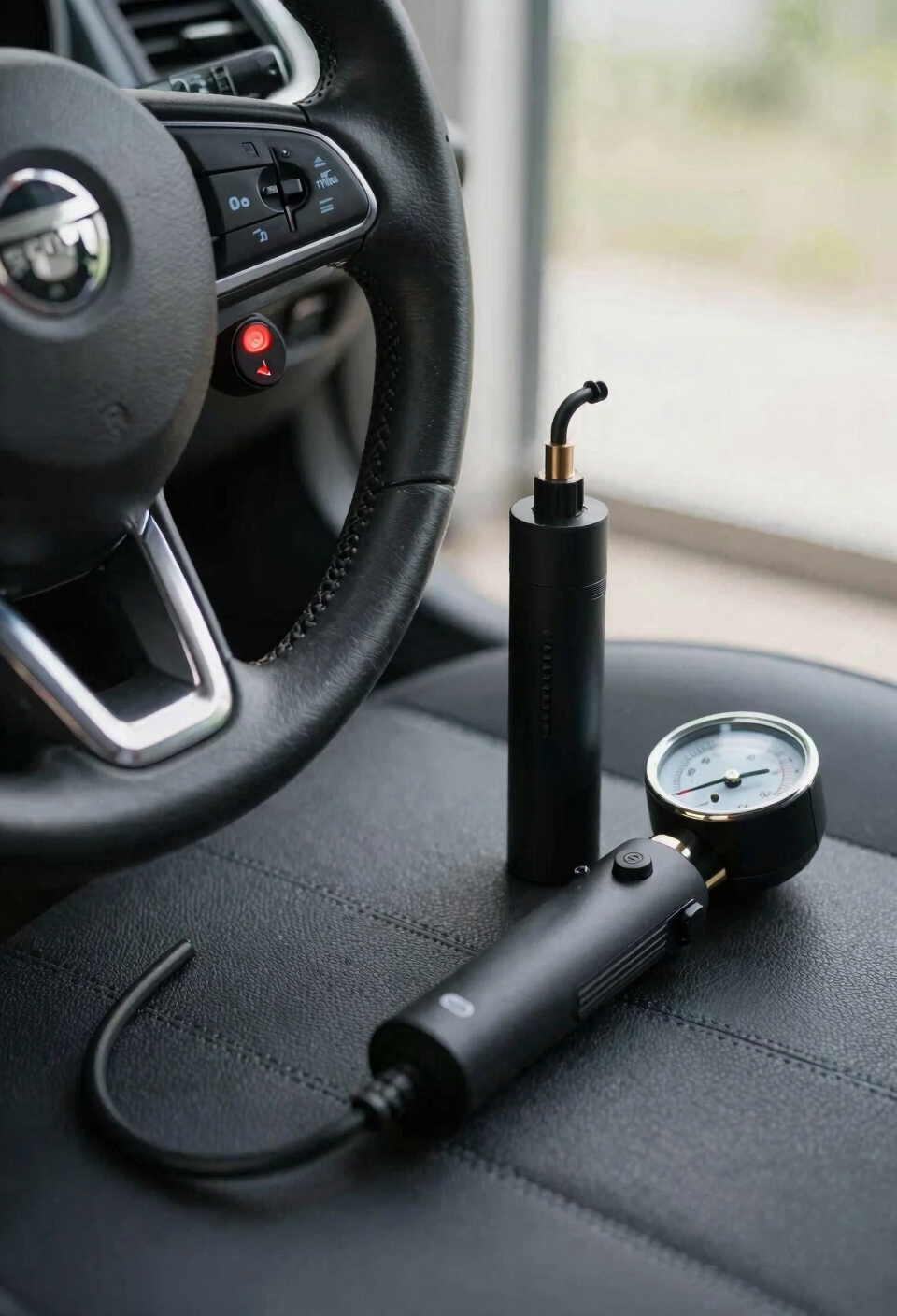
When that TPMS warning light flashes on your dashboard, your first instinct might be to panic—but don’t. Here’s your driver response: stay calm and find a safe spot to pull over. Once you’re somewhere secure, your roadside safety depends on what you do next. Don’t ignore it and keep driving—that’s how you damage your tire. Instead, grab your handheld tire gauge and check all four tires. Your TPMS alerted you, but it didn’t fix anything, so now you’re verifying which tire’s actually low. For the best results, use a color-coded and labeled wires approach to organize your tire pressure readings. Once you’ve confirmed the problem, that’s when your portable inflator becomes your best friend. You’ll pump up the tire right there, no gas station needed. Crisis averted, and you’re back on the road.
Recommended Products

Please Note: This product must be powered by a 12V DC Cigarette Lighter to function properly, and ensure the vehicle is in a running state. And it equipped with a 9.8-foot cord, which can meet the usage needs of most regular-sized vehicles.

ADVANCED TRUEGAUGE SCREEN: This battery tire inflator includes updated sensor technology, capable of collecting pressure data from tire inflators at a frequency of 200 times per second. Its valid data rate is higher than 80%, which is 60% better than the market average. From routine maintenance to roadside emergencies, its accurate readings ensure confident pressure checks and a safer driving experience.Suitable as a Father's Day gift for your dad.

QUICK & ACCURATE: Built with the highest quality materials, Airmoto is a portable tire inflator for car, trucks, SUVs, motorcycles, and bicycles. Quickly inflate your vehicle's tires in just minutes with precision accuracy up to 120 PSI. Small and compact car air pump that fits in your glove box or trunk.
The Portable Inflator’s Real Advantage: Immediate Roadside Correction
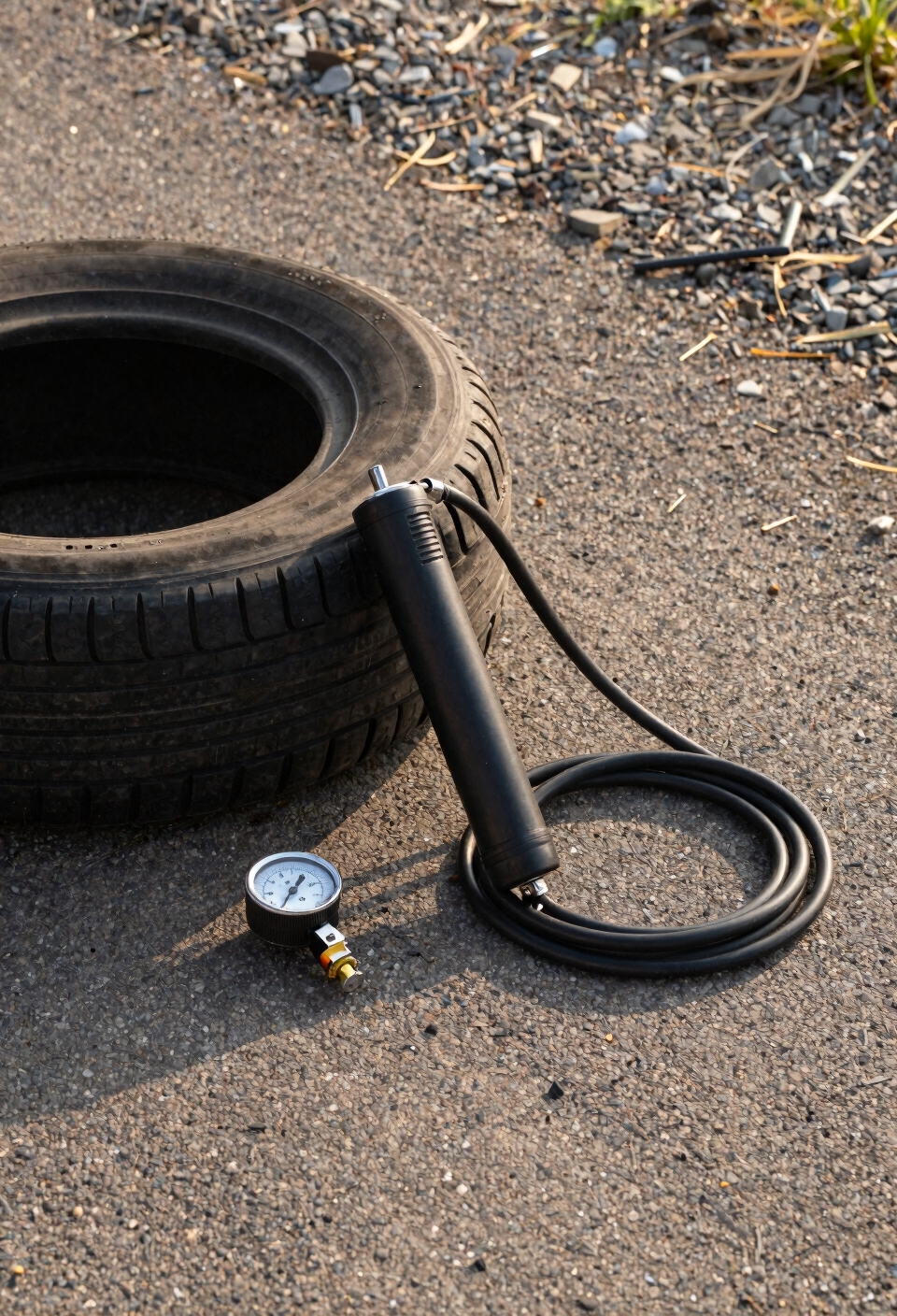
So here’s the thing about TPMS—it’s basically your tire’s smoke detector. It warns you, but it doesn’t fix anything. That’s where a portable inflator steps in and becomes your actual hero.
When your TPMS alert pops up while you’re driving, you need roadside convenience *now*. You can’t call a tow truck every time pressure drops. A compact inflator means you’re not stranded waiting for help or hunting down a gas station. You pull over, grab your inflator, and you’re back on the road in minutes.
Think of it this way: TPMS catches the problem, but the inflator solves it. Emergency portability matters because flats happen everywhere—empty highways, parking lots, your driveway at midnight. Having that tool with you transforms a frustrating situation into a quick fix you control yourself. Just as emergency visibility gear like reflective tape keeps you safe during roadside incidents, a portable inflator ensures you can handle tire pressure emergencies independently and keep moving.
Recommended Products
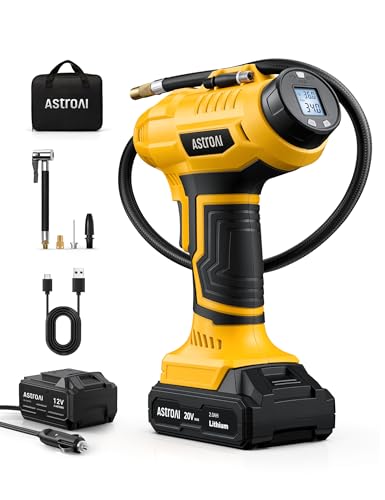
【FAST 160 PSI INFLATION WITH DURABLE METAL CONSTRUCTION】This tire inflator portable air compressor delivers up to 160 PSI maximum pressure.Under typical testing conditions, it can inflate a standard car tire from 30 to 36 PSI in under 40 seconds and inflate a 195/65/R15 tire in about 4 minutes. Built with a durable metal cylinder and gear system, it supports up to 20 minutes of continuous operation for reliable daily tire maintenance and roadside emergencies.
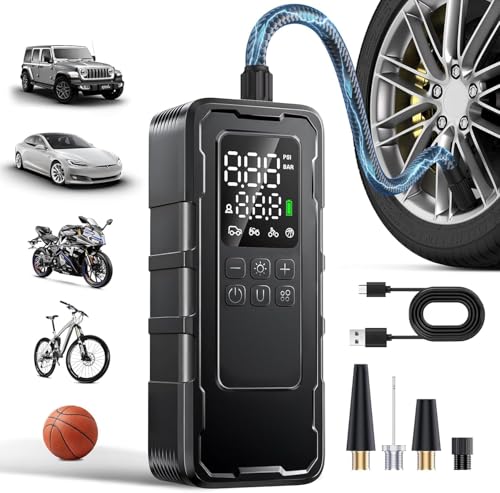
Fast & Quiet Inflation for Everyday Emergencies: This tire inflator delivers up to 150 PSI for fast, efficient inflation while operating with lower noise for a more comfortable experience. Ideal for roadside emergencies, daily commuting, road trips, and outdoor travel. Includes 4 nozzle attachments for car tires, motorcycles, bikes, sports balls, air mattresses, and other inflatables. Not suitable for heavy-duty truck tires or large paddle boards.
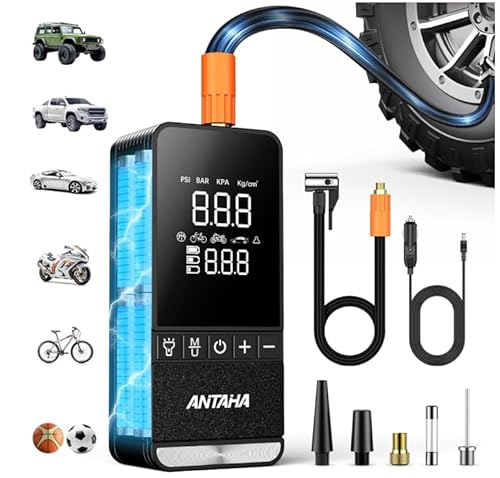
【3X FASTER INFLATION】ANTAHA portable air pump features a powerful motor and high-performance chip, providing 150PSI and inflating a tire from 30 to 36 PSI in under 1 minute—3X faster than others
Why Your Inflator Gauge Reads Different From Your Tire Gauge
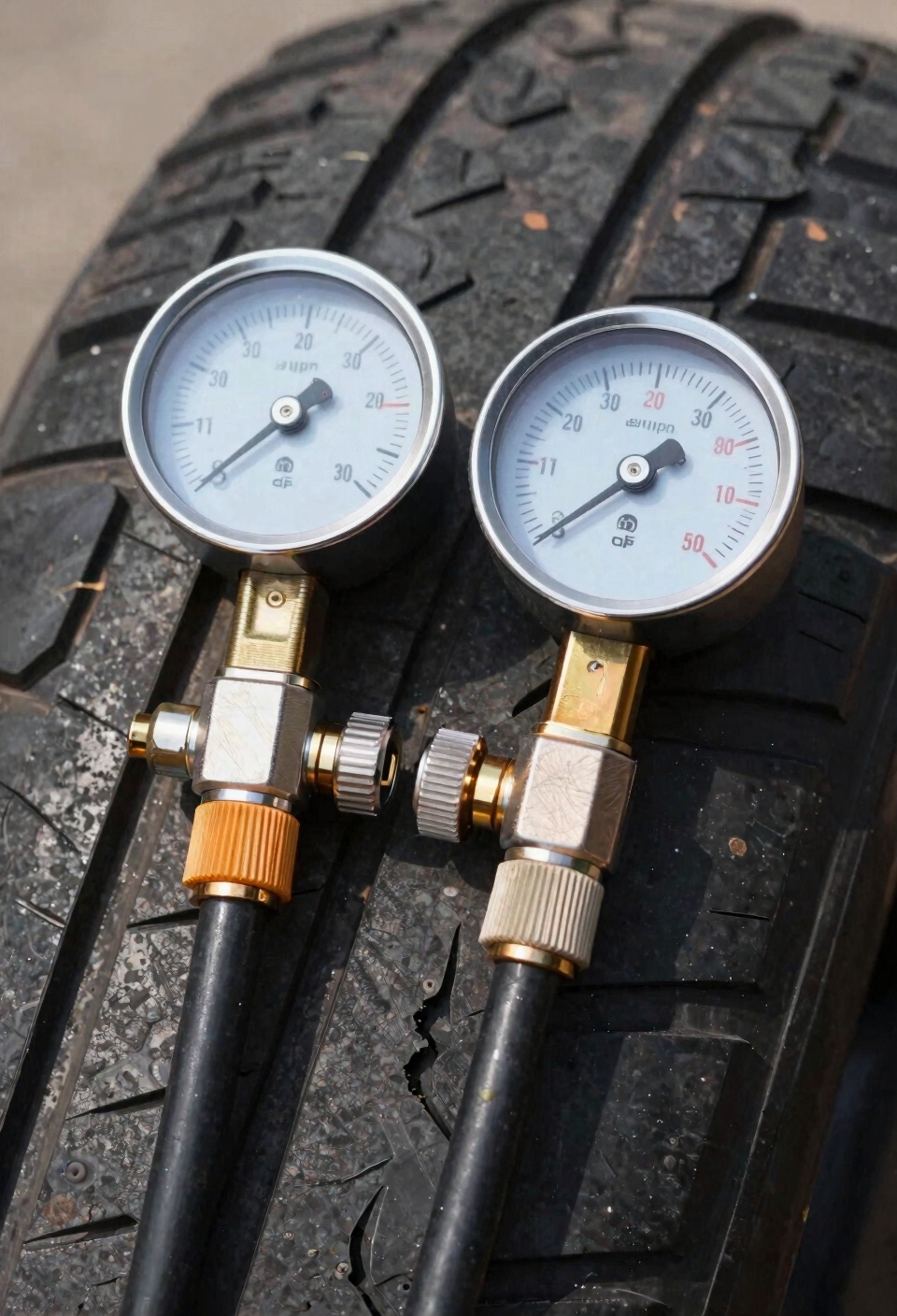
Ever notice how your tire inflator’s gauge shows a different number than your handheld tire gauge when you’re checking the same tire? Yeah, there’s actually a reason for that. When you’re using an inflator, the air travels through the hose volume before it reaches your tire’s valve core. All that trapped air in the hose creates a slight pressure difference, so your inflator reads higher than what’s actually inside the tire. It’s like measuring water temperature in a long pipe versus right at the faucet—you get different numbers. That’s why I always recommend double-checking with a handheld gauge after inflating. It gives you the real pressure inside your tire, not what’s sitting in the hose. This principle of pressure variance is similar to how bearing-mounted mechanisms enhance smooth operation in precision equipment by accounting for mechanical tolerances and friction points. Pretty sneaky, right?
Carry a Tire Inflator First: Here’s the Practical Sequence
Now that you know why your inflator gauge and tire gauge don’t always agree, here’s the thing: knowing the difference doesn’t matter much if you’re stuck on the road with a flat tire and no way to fix it. That’s why I’d pack a portable inflator before relying only on your TPMS. Here’s the real sequence: your TPMS warns you first, your handheld gauge confirms the problem, and your inflator actually fixes it. Your TPMS is basically the lookout—it spots trouble early. But it can’t do emergency repair. A compact inflator handles that job instantly. I keep mine in seasonal storage through winter and grab it before any road trip. Much like how load distribution depends on proper surface contact with lift pads during maintenance, tire pressure depends on correct inflation technique during roadside repairs. You need the tool that actually restores pressure, not just the alarm that tells you something’s wrong.
Recommended Products

Fast Inflation & Easy Operation: The air pump’s high-quality cylinder delivers 25L/Min inflation, filling a tire from 29 PSI to 36 PSI in just one minute. Easy operation, quick inflation. Please note that you should allow the air compressor to cool off for a while after 15 minutes of continuous operation. (NOTE: This tire inflator can only be used if connected to a 12 V DC, 15 A cigarette lighter). NO AC!

[Auto Shut-off & Fast Inflation] This car air pump ensures a worry-free experience with its auto shut-off feature. Simply set your desired pressure, start inflating, and the car air compressor will automatically stop once it reaches the right level - no more overinflating. With a rapid 30 LPM airflow, it can inflate a flat 195/60 R14 tire to 36 PSI under 3 minutes or a 215/60 R16 tire to 36 PSI under 5 minutes. Quick tire top-ups are easy

Anti-Slip & Shock-Resistant Silicone Protection: This silicone sleeve shields the tire inflator fromdrops, bumps and scratches while improving grip and reducing noise and vibration. It also boosts durability, portability, and safety to deliver a better user experience.Suitable as a Father's Day gift for your dad.
The Three-Tool Setup That Covers Every Tire Pressure Scenario
Forget picking one tool and hoping it solves everything, because it won’t. Here’s the truth: you need all three working together. Your TPMS catches problems early—that’s its job. Then you grab your handheld gauge to double-check what it’s telling you, because sometimes readings vary with seasonal pressure changes or temperature shifts. Finally, your portable inflator fixes the actual problem by adding air back into the tire. I mean, this combo covers literally every scenario you’ll face, whether you’re dealing with slow leaks, long term storage deflation, or just routine maintenance before a road trip. Each tool does one thing perfectly, and together they’ve got your back completely. Remember that practical safety features like quick adjustments on your gauge and inflator will minimize driver distraction during roadside tire checks.
Recommended Products

Powerful Inflation Performance - With a built-in true 6000mAh rechargeable battery, this tire inflator can support up to 4 car tires (195/55 R15) and charge them from 30PSI to 36PSI in 45 seconds

High-pressure inflation mode with automatic shutoff
![Car Tire Inflator Portable Air Compressor - Lamicall [4X Faster][150 PSI] Bike Air Pump, Rechargeable Battery, Pressure Gauge Display, LED Light, Automatic Car Cordless Pump for Motorcycle, Bike, Ball](https://m.media-amazon.com/images/I/41C7elFi2GL._SL500_.jpg)
【Ultra-Compact & Portable】This inflator is designed for maximum portability, with a footprint same with a compact footprint. It easily fits in your car’s glove box, center console, side door pockets, trunk, as well as a bicycle bag or motorcycle tailbox. Size: 6.3*2.7*2.1"
Digital or Analog: Which Inflator Gauge Reads True?
Which one actually tells you the real tire pressure—the dial you twist or the digital screen you tap? Here’s the thing: digital skepticism makes sense when you’re staring at a tiny number, but analog nostalgia won’t save you from a wrong reading either. Digital gauges give you precision down to 0.1 PSI and won’t drift over time like old-school dials can. But here’s the catch—both can lie depending on hose length and air trapped inside. I’ve seen digital displays and analog needles disagree, and honestly, that’s usually the inflator’s fault, not the gauge type. Your best move? Grab a digital inflator gauge, verify it with a handheld meter, and you’re golden. Much like voltmeter monitoring improves safety awareness in automotive electrical systems, real-time pressure verification ensures you maintain proper tire specifications for optimal vehicle performance and safety.
Recommended Products
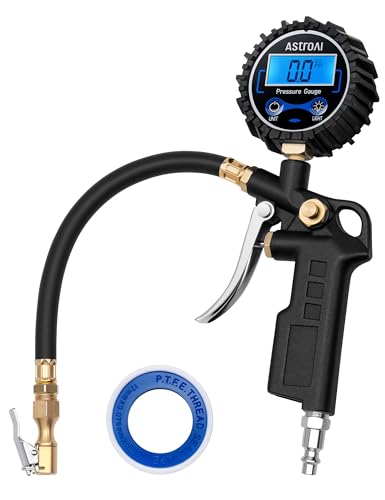
COMPATIBLE WITH both ¼” and ½” NPT air compressors outputs. COMPATIBLE WITH Standard Schrader Valves.
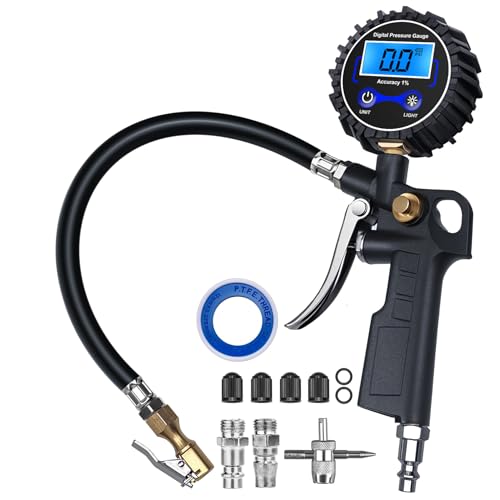
【Accuracy】The digital tire pressure gauge has 4 different measurement units: PSI, KPA, BAR, KG/CM². It reads within 1% of the exact tire pressure, with a resolution of 0.1 PSI and the measuring range is 3-250 PSI (0.2-17.2 Bar; 20-1724 Kpa; 0.2-17.5 kg/cm^2)

ALL-IN-ONE Feature: The LED backlit screen features measurements in PSI, KPA, Bar, and Kg/cm²; Includes an inflation gun, chuck, gauge, Thread seal tape roll, and bleed valve, all in one unit; Compatible with ¼" NPT air compressor's output
Frequently Asked Questions
How Often Should I Replace TPMS Sensors, and What’s the Typical Lifespan?
I’d recommend replacing your TPMS sensors every five to ten years. The battery lifespan typically runs seven to ten years, while sensor corrosion from road salt and moisture often necessitates earlier replacement around five years in harsh climates.
Can a Portable Inflator Damage My Tires if I Overinflate Accidentally?
Yes, overinflation can damage your tires. Excessive pressure spikes weaken sidewalls, cause uneven wear, and reduce traction. I’d recommend using an inflator with an auto-shutoff feature and a gauge to monitor pressure carefully.
Do All Vehicles Come With Factory TPMS, or Is It an Optional Feature?
I’ll tell you that TPMS isn’t universal—it’s a factory option on many vehicles, though regional regulations like those in the US mandate it on most new cars since 2007. You’ll want to verify yours.
What PSI Range Is Safe for Most Passenger Vehicles in Cold Weather?
I’d recommend keeping your cold psi between 28–32 PSI for most passenger vehicles during winter months. Your winter range should account for the 1–2 PSI drop that occurs when temperatures fall below freezing, so you’ll want to inflate slightly higher than your summer target.
Should I Inflate Tires When They’re Hot or Cold for Accurate Pressure Readings?
I’d inflate when they’re cold—before driving or hours after. Hot tires show inflated readings due to pressure drift from ambient temperature. Cold measurements give you accurate baseline pressures for proper maintenance.
Conclusion
Here’s the thing—you can’t put the cart before the horse. Your TPMS warns you that something’s wrong, but it won’t fix it. That’s why you’re carrying an inflator first. Yeah, you’ll eventually want both tools in your trunk, but start with the inflator. It’s your immediate problem-solver on the roadside. Monitor alerts you, inflator saves you. Both matter, but one actually gets you moving again.